This post originally appeared on Fast Data Science’s blog on LinkedIn.
Clinical trials are essential for medical advancement but are not without risk. Delays, budget overruns, and compliance issues can derail the most carefully planned studies. Proactive risk management is the key to ensuring patient safety, maintaining regulatory compliance, and achieving successful trial outcomes.
In this article we’ll explore the key risks in clinical trials, how AI-powered tools like the Clinical Trial Risk Tool can help mitigate these risks, and practical strategies for ongoing risk monitoring.
Every clinical trial carries a unique set of risks. Here are some of the most critical factors to watch out for:
Inconsistent documentation or protocol deviations can lead to non-compliance.
Changes in regulations across different regions can complicate trials.
Adverse events or side effects can jeopardise participant safety and trial integrity.
Inadequate monitoring can result in delayed responses to safety concerns.
Inefficient processes and inaccurate cost estimates can lead to delays and budget overruns.
Poor site performance and recruitment issues can stall progress.
Incomplete or inconsistent data collection can undermine trial outcomes.
Manual data entry increases the chance of human error.
Identifying these risks early is the first step towards effective risk management.
The Clinical Trial Risk Tool is an AI-powered solution that simplifies and enhances risk management. Here’s how it helps:
It uses natural language processing (NLP) to review protocols and identify potential risks.
Highlights issues such as missing statistical analysis plans or underpowered study designs.
Provides precise cost projections based on trial-specific factors.
Helps avoid unexpected expenses by identifying key cost drivers early.
Offers insights to address risks before they escalate.
Supports decision-making with data-driven analysis and real-time updates.
By leveraging AI and NLP, the Clinical Trial Risk Tool ensures your trial stays on track, compliant, and within budget.
Effective risk management doesn’t stop at the planning stage. Here are some practical strategies for continuous risk monitoring:
Schedule periodic risk assessments throughout the trial lifecycle.
Update risk management plans as new data becomes available.
Track metrics like patient recruitment rates, site performance, and data quality.
Use real-time dashboards to identify and address issues promptly.
Maintain open communication with sponsors, investigators, and site teams.
Ensure all stakeholders are aware of potential risks and mitigation strategies.
Use AI-powered tools like the Clinical Trial Risk Tool for ongoing risk analysis.
Automate data collection and reporting to minimise errors and improve efficiency.
Managing risks effectively is essential for ethical, compliant, and successful clinical trials. The Clinical Trial Risk Tool empowers you with accurate risk assessments, cost estimations, and proactive strategies to stay ahead of potential challenges.
Integrating AI into your risk management process can enhance patient safety, maintain compliance, and ensure your trial achieves its goals.
#ClinicalTrials #RiskManagement #AIDriven
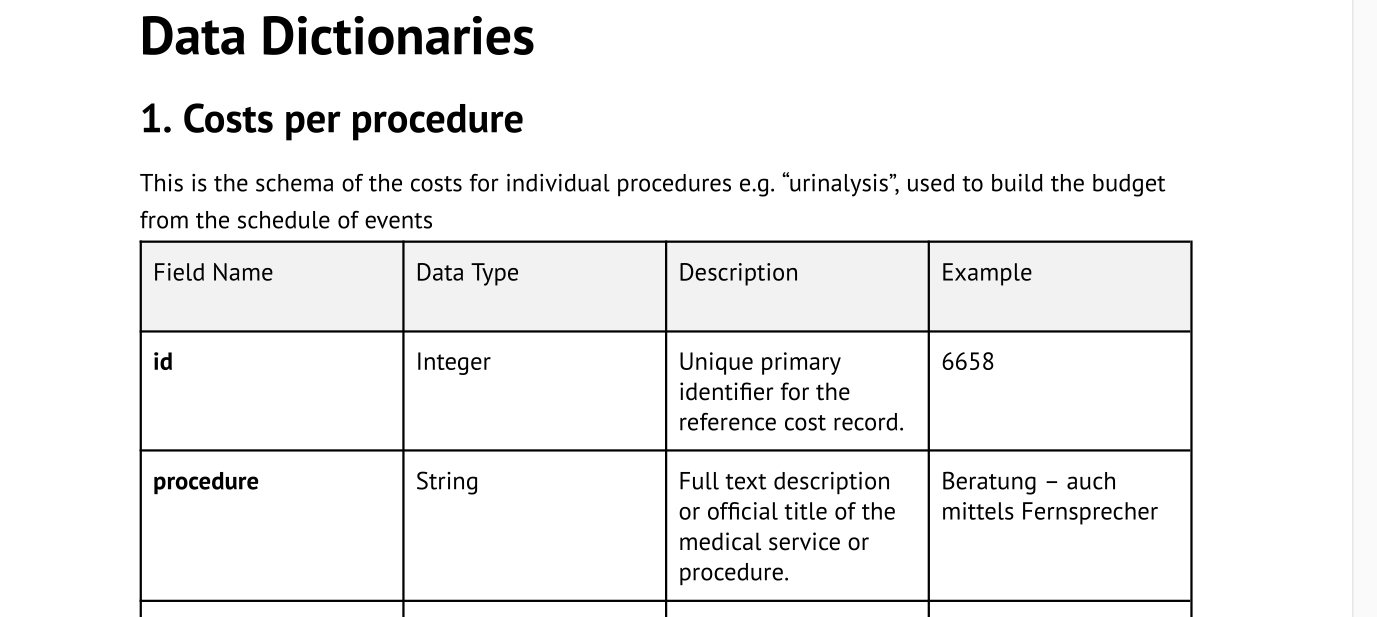
The Clinical Trial Risk Tool estimates top down cost and itemised site budgets using proprietary cost datasets of trial costs and procedure costs. These costs are assembled from publically available data. You can click below to view our data dictionary. Clinical Trial Risk Tool Trial cost data You can download the data dictionary used for cost estimation in the Clinical Trial Risk Tool Download data dictionary
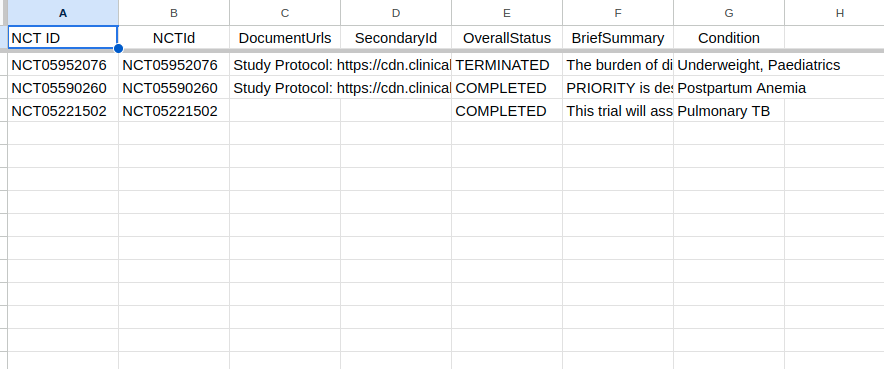
Clinical Trial Data Lookup Google Sheets™ plugin Do you need to look up clinical trial data from the NCT ID? Fast Data Science has developed a Google Sheets™ add-on (plugin) which finds clinical trials data. The plugin uses the clinicaltrials.gov API. Clinical Trial Data Google Sheets™ Plugin Install plugin Install the free Google Sheets™ plugin for looking up clinical trial data Install Plugin The user will provide a number of NCT IDs in column A (or whichever one they choose) in the Google Sheet™, and the tool will look up those NCT IDs and retrieve information on those trials and populate that information into columns.
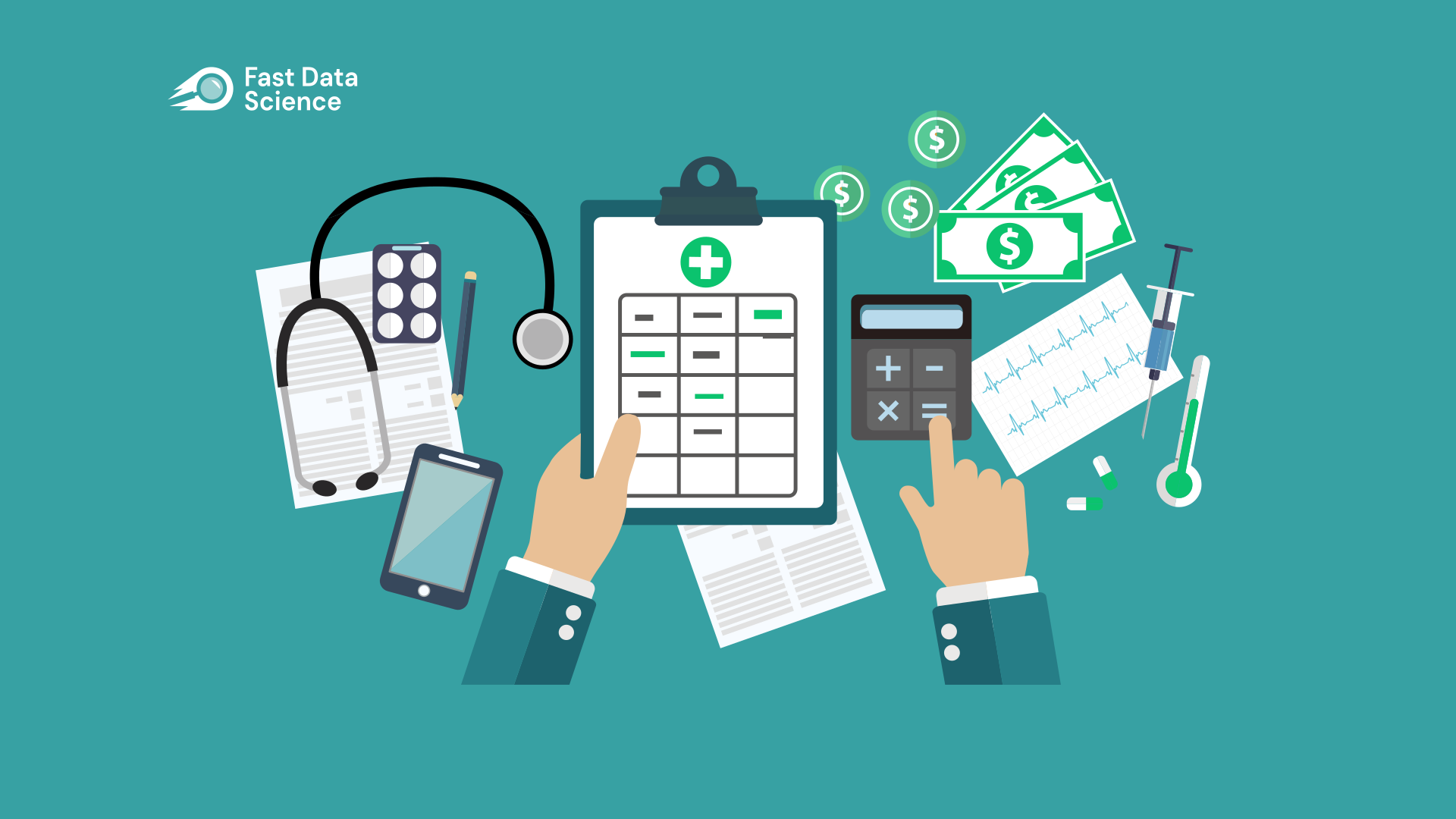
You may have been tasked with creating a clinical trial site budget. This is a budget itemising all the costs that will be incurred at the study site. The site budget may be needed To estimate the total cost of that site running part of the trial, as part of a bid to the CRO or sponsor To identify who needs to be reimbursed for each cost item To ascertain whether or not it is feasible to run the trial at that site To ensure that the site is reimbursed for the costs that they incur while running the trial If you are building a site budget, the most important document is the study protocol.