Guest post by Safeer Khan, Lecturer at Department of Pharmaceutical Sciences, Government College University, Lahore, Pakistan
In recent years, the cost of conducting clinical trials has risen dramatically. This increase has posed a significant challenge for pharmaceutical companies, researchers, and healthcare innovators. According to a study published in Nature Reviews in 2017, the median cost of conducting a study was $3.4 million for phase I trials, $8.6 million for phase II trials, and $21.4 million for phase III trials [1]. These rising costs threaten not only the financial health of companies but also the accessibility of new treatments for patients. Therefore, finding ways to address these cost challenges is critical for the future of drug development.
This blog will explore six proven strategies that can help pharmaceutical companies and researchers tackle the growing financial strain of clinical trials.
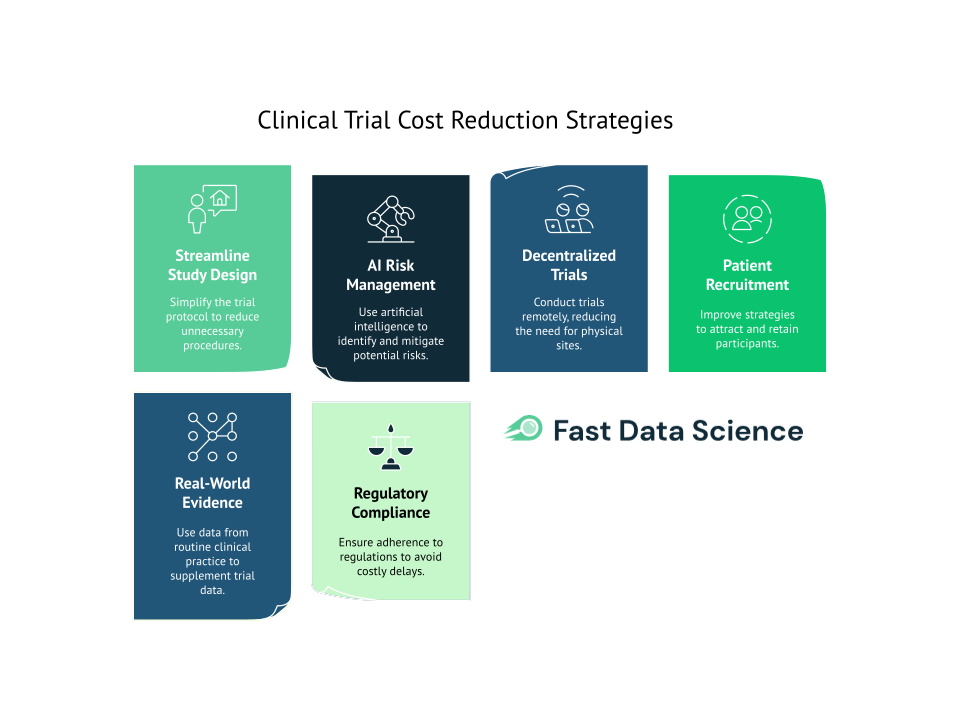
The complexity of designs often contributes to increasing clinical trial costs. According to a study conducted by the Tufts Centre for the Study of Drug Development, more complex and burdensome protocols are leading to longer study cycle times and higher costs. There are several specific strategies that can be used to streamline study designs and reduce the increasing clinical trial cost.
Fed up of increasing clinical trial costs?
AI is transforming the way clinical trials are managed, particularly in predicting and mitigating risks that can escalate costs[3]. By leveraging AI, pharmaceutical companies can take a more proactive approach, identifying and addressing risks before they cause significant disruptions or financial strain.
Decentralized clinical trials (DCTs) are gaining traction as a way to reduce the costs and logistical complexities associated with traditional clinical trials [4]. The global DCTs market will grow from $9.53 billion in 2024 to $38.2 billion by 2034. Read more about: Decentralized Clinical Trials (DCTs) Market Size, Trends and Growth Factors. Regarding cost reduction, the key benefits of decentralized trials includes:
Patient Recruitment Into Clinical Trials is the most expensive and challenging aspect, with recruitment costs accounting for 40% of the total budget. However, with improved strategies and innovative approaches, pharmaceutical companies can significantly reduce recruitment costs and enhance trial efficiency.
Real-world Data is quickly becoming an essential resource in clinical trials, providing valuable insights that can enhance trial designs, streamline patient recruitment, and ultimately lower costs. Some of the key benefits of using RWD to reduce the increasing clinical trial costs include:
Regulatory compliance is an essential aspect of clinical trials, but it can also be a source of significant delays and cost overruns if not managed properly [5]. Staying ahead of regulatory requirements, therefore, is a critical strategy to avoid escalating costs.
Timely and Accurate Regulatory Documentation: Ensuring that all regulatory documentation is accurately prepared and submitted on time helps prevent trial delays. Properly prepared documentation saves time and reduces the risk of fines or penalties due to non-compliance.
Incorporating Regulatory Expertise Early: Understanding specific regulatory requirements for each stage ensures that trial design, data collection, and endpoints meet regulatory standards, preventing costly adjustments later that can extend timelines and increase expenses.
Implementing Technology Solutions for Compliance: The use of electronic submission platforms, real-time compliance tracking tools, and automated reporting systems significantly improves the efficiency of clinical trial. These technologies reduce administrative burdens and provide real-time insights into the trial’s compliance status, helping to prevent delays and additional costs.
As clinical trials become increasingly complex and expensive, pharmaceutical companies and researchers must adopt innovative strategies to manage rising costs. Key approaches such as streamlining study designs, utilizing AI for risk management, adopting decentralized trials, enhancing patient recruitment, leveraging real-world data, and ensuring timely regulatory compliance can all play a pivotal role in reducing financial strain. Each of these strategies offers distinct benefits, from improving efficiency and patient accessibility to ensuring regulatory compliance, all while cutting costs. By implementing these effective strategies, pharmaceutical companies can not only lower trial expenses but also enhance the overall trial process, making drug development faster, more efficient, and more affordable for both researchers and patients.
Martin, L., et al., How much do clinical trials cost? Nature Reviews Drug Discovery, 2017. 16(6): p. 381-382.
Pallmann, P., et al., Adaptive Designs in Clinical Trials: Why Use Them, and How to Run and Report Them. BMC Medicine, 2018. 16(1).
Jain, S.S., et al., The Coming AI Revolution in Clinical Trials. Journal of the American College of Cardiology, 2025. 85(4): p. 378-380.
Van Norman, G.A., Decentralized clinical trials: the future of medical product development?∗._ Basic to Translational Science, 2021. 6(4): p. 384-387.
Lai, J., et al., Drivers of start-up delays in global randomized clinical trials. Therapeutic innovation & regulatory science, 2021. 55(1): p. 212-227.
Estimating the total cost of a clinical trial before it runs is challenging. Public data on past trial costs can be hard to come by, as many companies guard this information carefully. Trials in high income countries and low and middle income countries have very different costs. Upload your clinical trial protocol and create a cost benchmark with AI Protocol to cost benchmark The Clinical Trial Risk Tool uses AI and Natural Language Processing (NLP) to estimate the cost of a trial using the information contained in the clinical trial protocol.
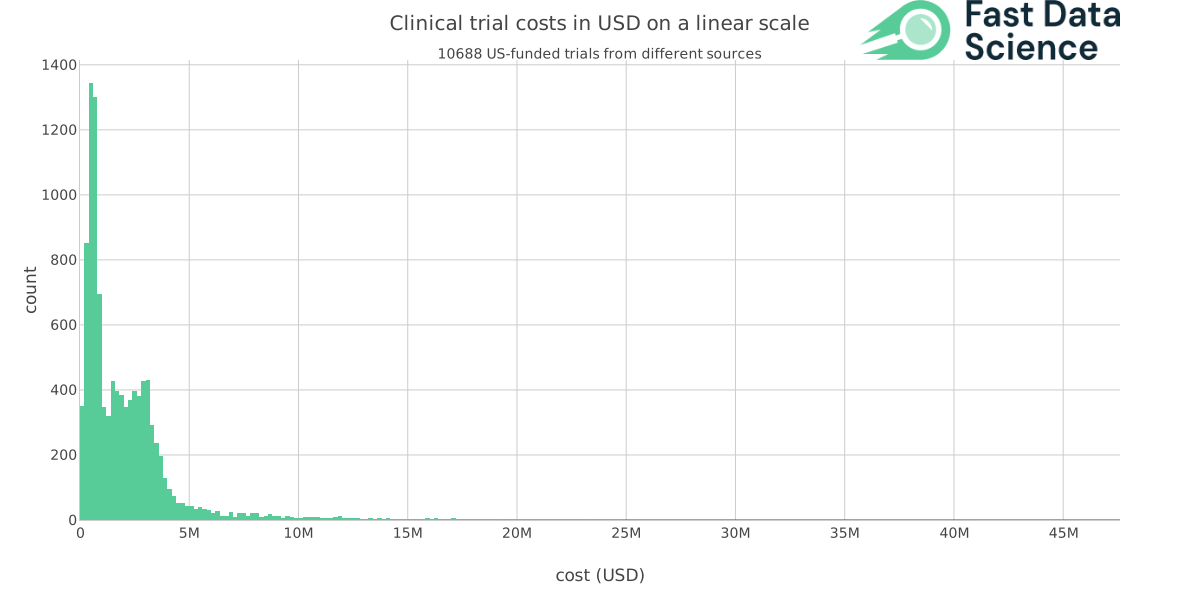
You can download a white paper about clinical trial cost benchmarking here Estimating the total cost of a clinical trial before it runs is challenging. Public data on past trial costs can be hard to come by, as many companies guard this information carefully. Trials in high income countries and low and middle income countries have very different costs. Clinical trial costs are not normally distributed.[1] I took a dataset of just over 10,000 US-funded trials.

Guest post by Safeer Khan, Lecturer at Department of Pharmaceutical Sciences, Government College University, Lahore, Pakistan Introduction The success of clinical studies relies heavily on proper financial planning and budgeting. These processes directly impact key factors such as project timelines, resource allocation, and compliance with regulatory requirements. The accurate forecasting of costs for clinical trials, however, is a highly complex and resource-intensive process. A study by the Tufts Center for the Study of Drug Development found that the average cost of developing a new drug is approximately $2.