
This post originally appeared on Fast Data Science’s blog on LinkedIn.
Budgeting is one of the most critical steps when planning a clinical trial. Clinical trials are complex, multi-phase studies that require significant resources, and understanding the costs associated with each phase is crucial for an accurate clinical trial budget. In this post, we’ll explore the different phases of clinical trials and the key factors that influence their costs, providing insights into how to prepare a comprehensive budget that aligns with your trial’s needs. Creating a clinical research budget is critical in planning a successful trial. A well-prepared budget ensures financial transparency, meets funding requirements, and accounts for expected and unforeseen expenses. This guide’ll cover essential tips for building a clinical research budget that sets your trial on the path to success.
Each funding source, whether from federal agencies, foundations, or industry sponsors, operates under its own set of rules and guidelines. To build an effective budget, it’s essential to understand these requirements. Ensure your budget:
Complies with the funding body’s restrictions.
Meets any specific requirements for how funds should be allocated.
Is flexible enough to accommodate any reporting or audit requirements from the funding source.
Failing to align your budget with funder guidelines can result in rejected proposals or delays in securing funding.
Some funders impose limits on salaries or the overall budget for the project. Be sure to:
Review funding guidelines for salary caps.
Adjust personnel costs accordingly to ensure compliance.
Allocate funds strategically, so essential activities like recruitment, monitoring, and data management remain fully funded.
Ignoring these caps could lead to a significant shortfall in the project budget, putting key activities at risk.
Unexpected expenses can arise throughout a clinical trial, driving up costs and jeopardising your budget. Common hidden fees include:
Serious adverse events (SAEs): These can require additional monitoring or reporting.
Protocol amendments: Changes to the study may involve revising documents, retraining staff, and resubmitting to ethics boards.
Additional site monitoring: Some trials may require more frequent visits than initially planned.
Plan for these potential costs from the beginning, ensuring your budget includes room to cover unexpected events. Anticipating hidden costs early helps you avoid financial surprises later in the study.
Successful budgeting requires continuous communication between the finance and research teams. Regular updates between departments ensure that all costs, from recruitment to regulatory compliance, are accounted for in the budget. To achieve this:
Schedule regular budget meetings with both finance and research stakeholders.
Update the budget as the study progresses to reflect any project scope or requirements changes.
Ensure transparency between all parties managing and overseeing the trial’s finances.
This collaborative approach reduces the likelihood of missing critical expenses and aligns the budget with actual needs.
Once you’ve followed the essential tips, it’s time to finalise your clinical trial budget. Here are the final steps:
Identify and total all direct costs, such as:
Salaries and personnel expenses.
Travel costs for study-related activities.
Equipment and materials required for the trial.
These costs form the core of your clinical research budget and should be meticulously tracked.
Indirect costs, often referred to as Facilities & Administrative (F&A) costs, cover overhead expenses like utilities, administrative support, and facility use. Once you have calculated your direct costs:
Multiply them by your institution’s indirect cost rate.
Apply the correct rate as determined by the funding source or institution guidelines.
Accurately accounting for indirect costs ensures the budget reflects the trial’s actual cost.
Every clinical trial faces potential challenges, from recruitment delays to technical issues. To prepare for these, build contingency funds into your budget:
Allocate extra funds to cover unforeseen events like participant dropouts, site issues, or regulatory delays.
Ensure the contingency amount is reasonable, covering possible disruptions without inflating the budget.
Having a financial buffer helps prevent project delays and ensures the trial can continue smoothly.
Preparing a clinical research budget involves more than just listing expenses. It requires careful planning, attention to detail, and the foresight to anticipate potential challenges. By aligning your budget with the funding source, identifying hidden costs, and keeping communication open between departments, you can develop a comprehensive and realistic budget that supports the success of your clinical research.
Don’t forget to sum up all direct costs, apply the correct indirect rates, and plan for contingencies. A well-prepared budget ensures financial transparency and helps you avoid unexpected setbacks, setting your clinical trial on the path to success.
If you want to streamline your clinical trial budget, we at Fast Data Science can provide expert support in AI-driven cost estimation and trial planning. Contact us today to learn more.
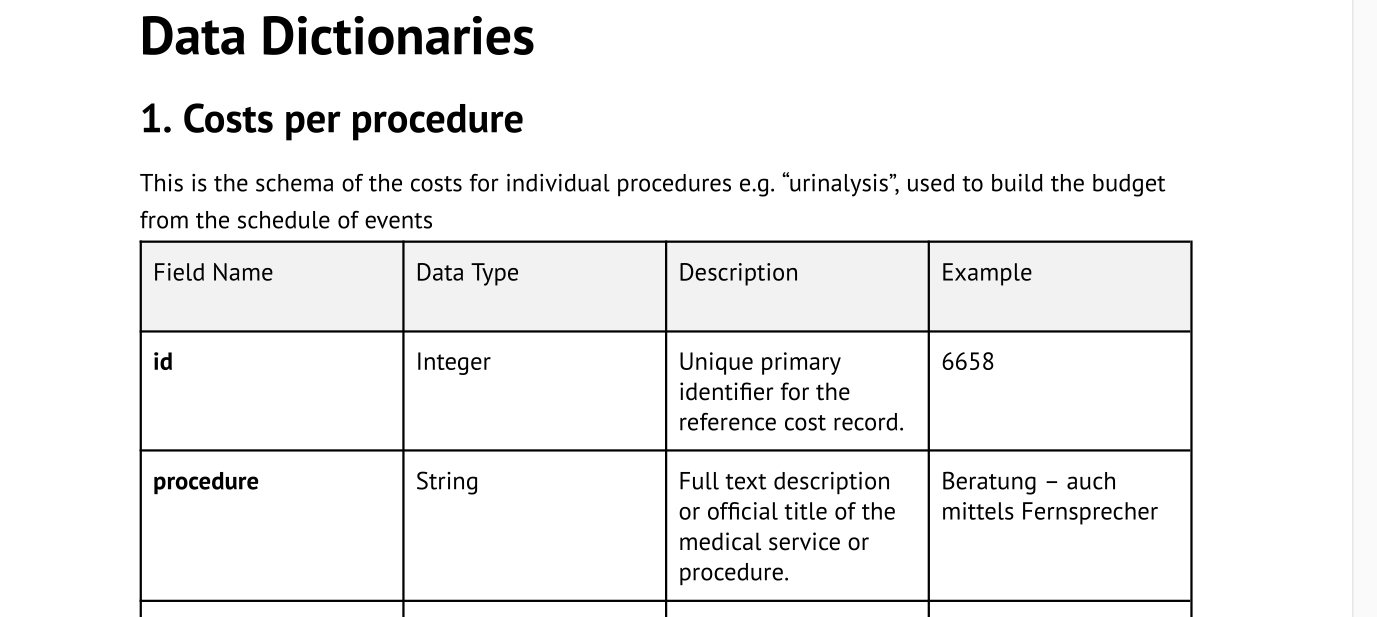
The Clinical Trial Risk Tool estimates top down cost and itemised site budgets using proprietary cost datasets of trial costs and procedure costs. These costs are assembled from publically available data. You can click below to view our data dictionary. Clinical Trial Risk Tool Trial cost data You can download the data dictionary used for cost estimation in the Clinical Trial Risk Tool Download data dictionary
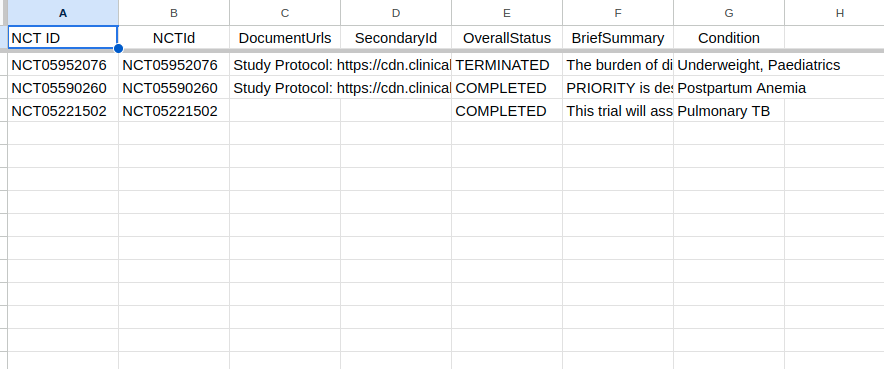
Clinical Trial Data Lookup Google Sheets™ plugin Do you need to look up clinical trial data from the NCT ID? Fast Data Science has developed a Google Sheets™ add-on (plugin) which finds clinical trials data. The plugin uses the clinicaltrials.gov API. Clinical Trial Data Google Sheets™ Plugin Install plugin Install the free Google Sheets™ plugin for looking up clinical trial data Install Plugin The user will provide a number of NCT IDs in column A (or whichever one they choose) in the Google Sheet™, and the tool will look up those NCT IDs and retrieve information on those trials and populate that information into columns.
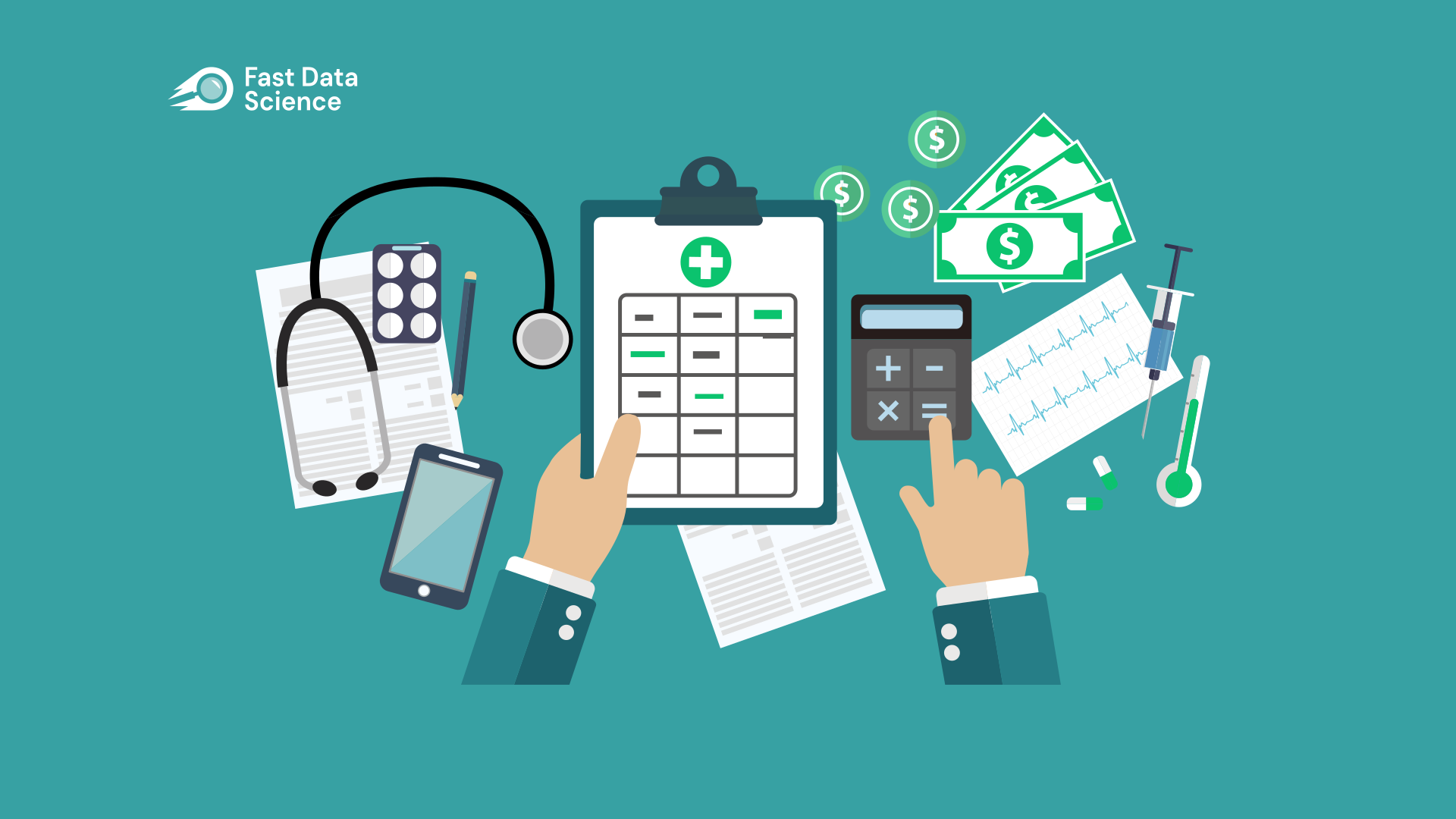
You may have been tasked with creating a clinical trial site budget. This is a budget itemising all the costs that will be incurred at the study site. The site budget may be needed To estimate the total cost of that site running part of the trial, as part of a bid to the CRO or sponsor To identify who needs to be reimbursed for each cost item To ascertain whether or not it is feasible to run the trial at that site To ensure that the site is reimbursed for the costs that they incur while running the trial If you are building a site budget, the most important document is the study protocol.