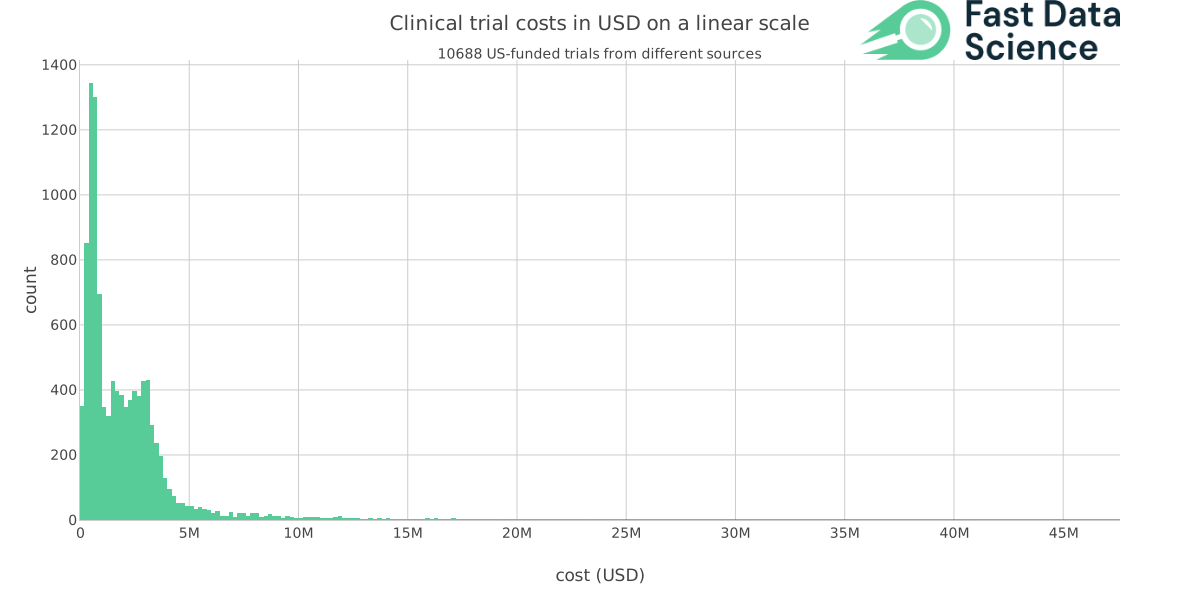
Estimating the total cost of a clinical trial before it runs is challenging. Public data on past trial costs can be hard to come by, as many companies guard this information carefully. Trials in high income countries and low and middle income countries have very different costs.
Upload your clinical trial protocol and create a cost benchmark with AI
The Clinical Trial Risk Tool provides a solution. You can upload the protocol or synopsis and it will generate a cost benchmark using similar comparable trials from a public database of grants, and build a basket of comparable trials. This technique is called reference class forecasting, and was developed by Daniel Kahneman and Amos Tversky and helped Kahneman win the Nobel Memorial Prize in Economic Sciences in 2002.
You can find out more in our white paper.
Range:
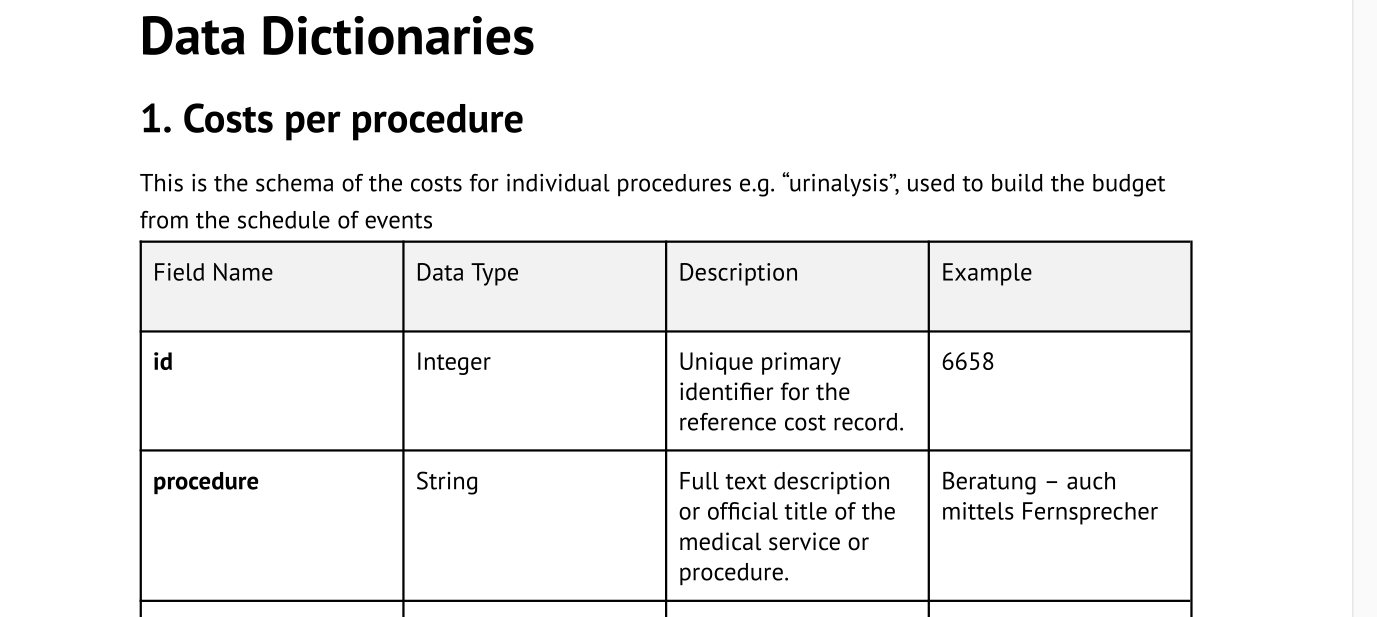
The Clinical Trial Risk Tool estimates top down cost and itemised site budgets using proprietary cost datasets of trial costs and procedure costs. These costs are assembled from publically available data. You can click below to view our data dictionary. Clinical Trial Risk Tool Trial cost data You can download the data dictionary used for cost estimation in the Clinical Trial Risk Tool Download data dictionary
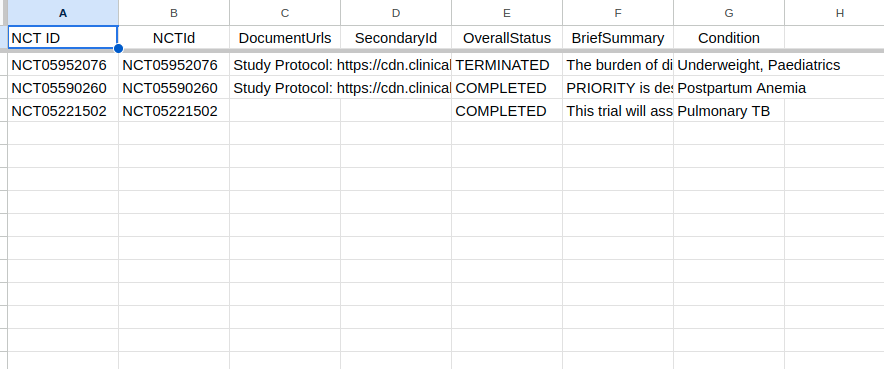
Clinical Trial Data Lookup Google Sheets™ plugin Do you need to look up clinical trial data from the NCT ID? Fast Data Science has developed a Google Sheets™ add-on (plugin) which finds clinical trials data. The plugin uses the clinicaltrials.gov API. Clinical Trial Data Google Sheets™ Plugin Install plugin Install the free Google Sheets™ plugin for looking up clinical trial data Install Plugin The user will provide a number of NCT IDs in column A (or whichever one they choose) in the Google Sheet™, and the tool will look up those NCT IDs and retrieve information on those trials and populate that information into columns.
You may have been tasked with creating a clinical trial site budget. This is a budget itemising all the costs that will be incurred at the study site. The site budget may be needed To estimate the total cost of that site running part of the trial, as part of a bid to the CRO or sponsor To identify who needs to be reimbursed for each cost item To ascertain whether or not it is feasible to run the trial at that site To ensure that the site is reimbursed for the costs that they incur while running the trial If you are building a site budget, the most important document is the study protocol.