
Guest post by Safeer Khan, Lecturer at Department of Pharmaceutical Sciences, Government College University, Lahore, Pakistan
The success of clinical studies relies heavily on proper financial planning and budgeting. These processes directly impact key factors such as project timelines, resource allocation, and compliance with regulatory requirements. The accurate forecasting of costs for clinical trials, however, is a highly complex and resource-intensive process. A study by the Tufts Center for the Study of Drug Development found that the average cost of developing a new drug is approximately $2.6 billion. This underscores the critical need for accurate budgeting to avoid unforeseen expenditures that can cause significant financial strain.
The nature of clinical research is diverse and often unpredictable, involving multiple phases, study designs, and geographical regions. This complexity presents significant challenges in ensuring that projected expenses align with actual expenditures. In response to these challenges, recent advancements in budgeting methodologies have introduced sophisticated tools, such as clinical trial budget templates and automated budget generators. These tools provide a more streamlined and efficient approach to budgeting, reducing the time and effort traditionally required for cost estimation. Moreover, they mitigate common financial risks, including cost overruns and inefficient resource allocation, which are frequent sources of trial disruption. This blog will examine best practices for effectively utilizing clinical trial budget templates and generators.
Create your trial budget
A clinical study budget outlines all projected costs, from recruitment to data analysis, ensuring that each element of the trial has sufficient financial backing [1]. Typical categories include:
Understanding the various cost categories and the complexities involved is essential for ensuring the financial viability of a clinical study. Budgeting challenges often emerge due to the unpredictable nature of clinical trials, such as delays in recruitment, unexpected regulatory issues, or unforeseen patient dropout. Therefore, a well-structured budget can help mitigate these risks, but achieving financial accuracy requires thorough planning, regular updates, and the appropriate tools [2].
Clinical Trial Budget Templates are standardized, pre-built documents that allow researchers to track and calculate trial expenses in an organized manner. These templates are often used in early-stage budgeting to outline major expenses, such as personnel, equipment, and operational costs. Key advantages of using budget templates include:
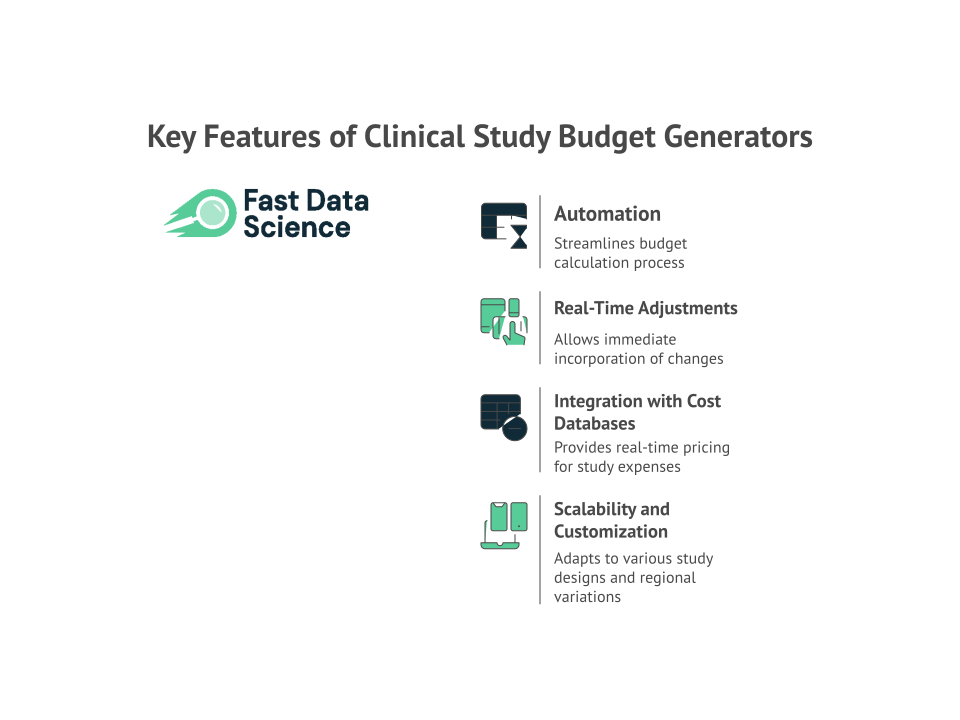
Clinical trial budget generators extend the capabilities of traditional budgeting approaches by automating substantial portions of the process. These systems enable clinical trial managers to develop budgets that are comprehensive yet adaptable, providing real-time cost estimates informed by factors such as study size, duration, and geographic setting. Key features of budget generators are:
AI-enabled clinical trial budget generators, such as those offered by ClinicalTrialRisk.org, provide capabilities beyond basic budget creation. They can also forecast potential risks, including unexpected cost variations or delays in study timelines. By analyzing underlying data patterns, these tools produce more precise projections, thereby reducing the likelihood of unforeseen financial issues.
To maximize the utility of clinical trial budget templates and generators, it is imperative to apply established Best Practices in Clinical Research Budgeting that enhance accuracy and operational efficiency.
The clinical trial budget templates and automated budget generators not only streamlines the budgeting process but also enhances financial accuracy and strengthens risk management. As clinical trials become increasingly complex, the integration of advanced tools, including those with AI-based risk prediction capabilities, helps ensure that budgets remain both robust and adaptable. However, the effectiveness of these tools is maximized when they are used in conjunction with established best practices, enabling researchers to more effectively navigate the financial complexities of clinical research while maintaining focus on their scientific objectives.
Nevens, H., et al., Budgeting of non-commercial clinical trials: development of a budget tool by a public funding agency. Trials, 2019. 20(1): p. 714.
Fassas, E. and S. Wang, Budgeting for clinical trials, in Translational Urology. 2025, Elsevier. p. 283-286.
Gumber, L., et al., Operational complexities in international clinical trials: a systematic review of challenges and proposed solutions. BMJ open, 2024. 14(4): p. e077132.
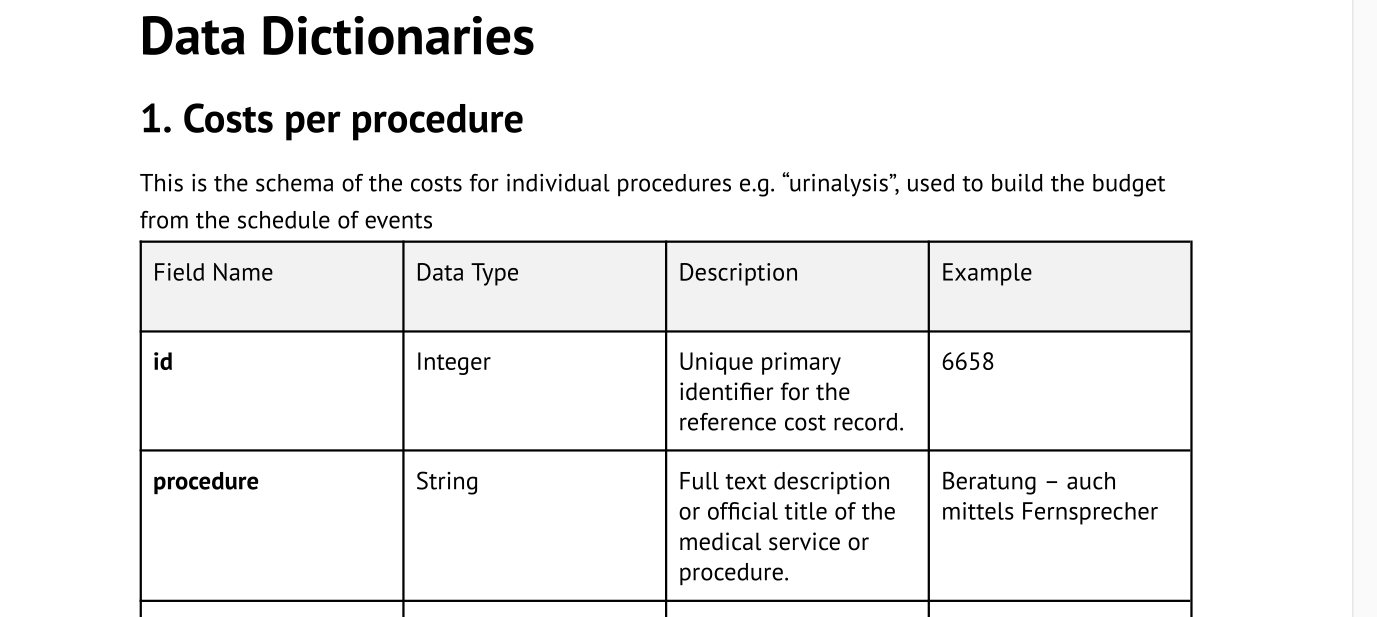
The Clinical Trial Risk Tool estimates top down cost and itemised site budgets using proprietary cost datasets of trial costs and procedure costs. These costs are assembled from publically available data. You can click below to view our data dictionary. Clinical Trial Risk Tool Trial cost data You can download the data dictionary used for cost estimation in the Clinical Trial Risk Tool Download data dictionary
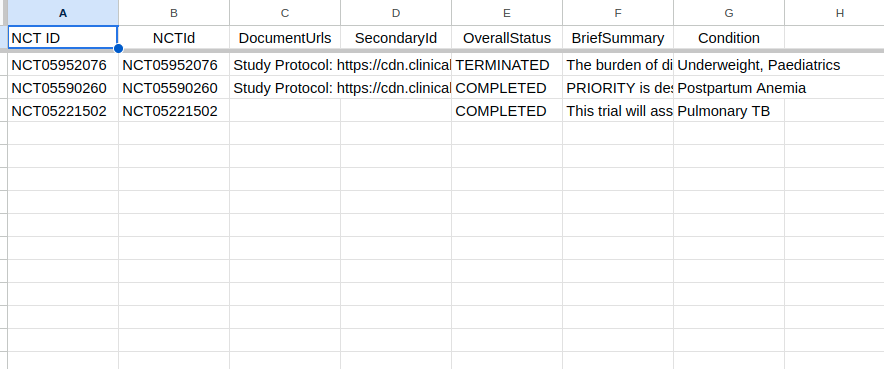
Clinical Trial Data Lookup Google Sheets™ plugin Do you need to look up clinical trial data from the NCT ID? Fast Data Science has developed a Google Sheets™ add-on (plugin) which finds clinical trials data. The plugin uses the clinicaltrials.gov API. Clinical Trial Data Google Sheets™ Plugin Install plugin Install the free Google Sheets™ plugin for looking up clinical trial data Install Plugin The user will provide a number of NCT IDs in column A (or whichever one they choose) in the Google Sheet™, and the tool will look up those NCT IDs and retrieve information on those trials and populate that information into columns.
You may have been tasked with creating a clinical trial site budget. This is a budget itemising all the costs that will be incurred at the study site. The site budget may be needed To estimate the total cost of that site running part of the trial, as part of a bid to the CRO or sponsor To identify who needs to be reimbursed for each cost item To ascertain whether or not it is feasible to run the trial at that site To ensure that the site is reimbursed for the costs that they incur while running the trial If you are building a site budget, the most important document is the study protocol.