Phase 2 trial costs are difficult to model and benchmark. To illustrate, see below a histogram of 1,045 US-funded Phase 2 trials from a dataset assembled by Fast Data Science from various sources.
The median cost was $1,459,000 and the mean cost was $2,205,000. The standard deviation was $3,035,000.
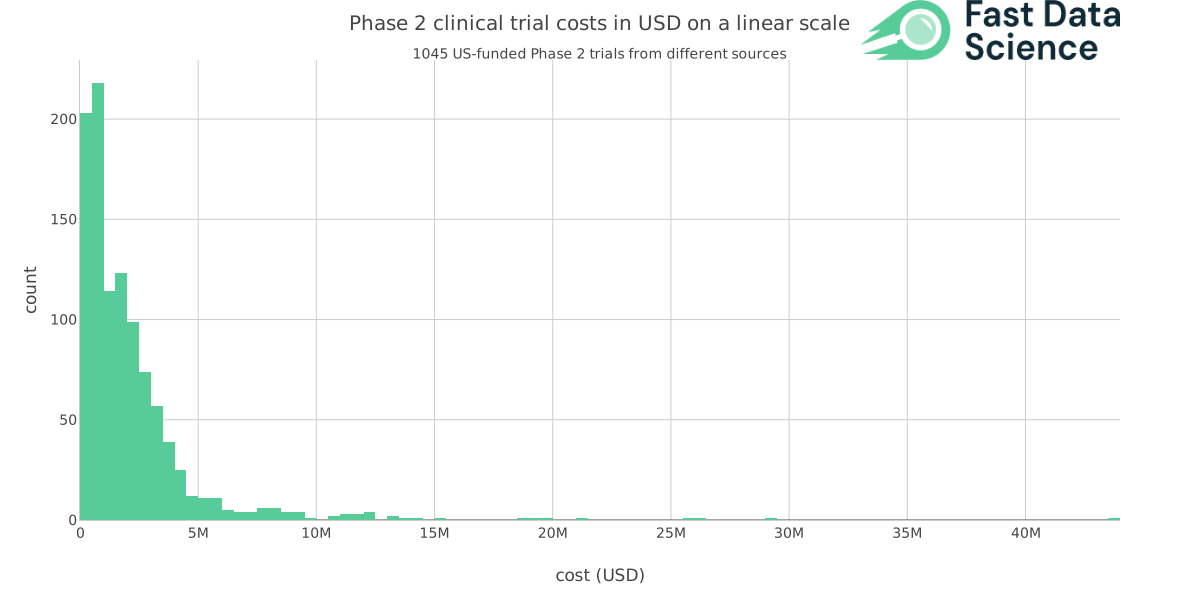
Above: histogram of Phase 2 clinical trial costs.
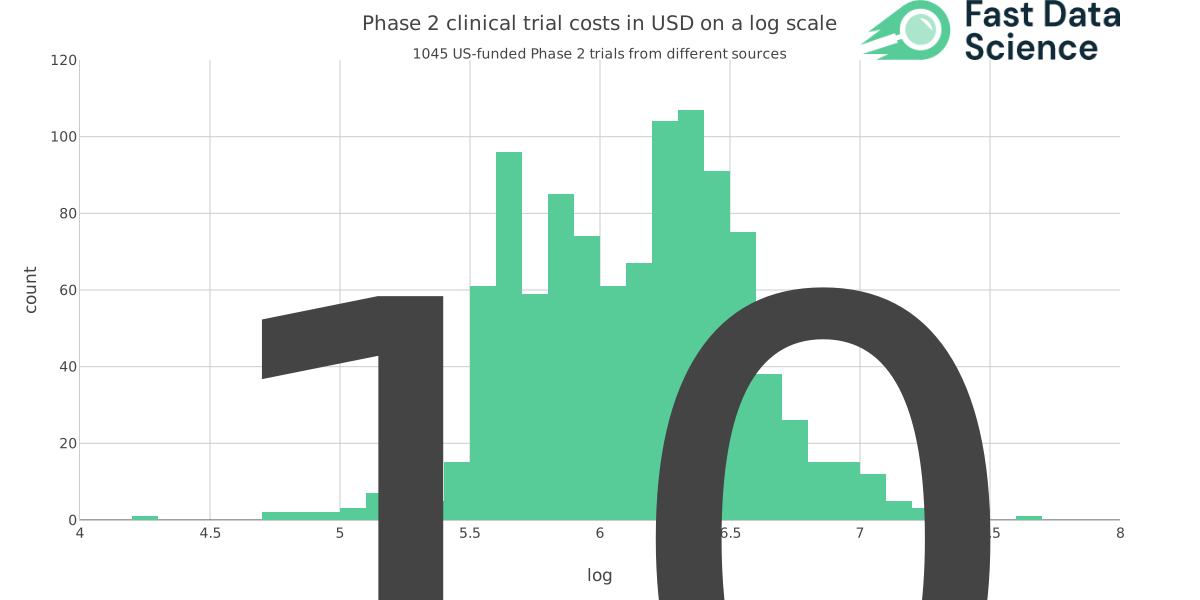
It’s often hard to interpret and model working with cost values directly, so it’s advantageous to perform a log transform.
Above: histogram of Phase 2 clinical trial costs using a log 10 scale. You can use the button to toggle through the other phases.
Phase 2 costs can be difficult to benchmark because it is the “inflection point” of a drug’s life. In the log plot above, you can see a bimodal distribution.
The lower of the two modes may represent smaller “Phase 2a” pilot studies (we have not fully validated this hypothesis). These are focused on dosing and early signals of efficacy in a small, controlled group of patients.
The higher mode may correspond to the “Phase 2b” pivotal trials. They are larger, longer, and designed to look like mini-Phase 3 trials. A Phase 2b trial can involve hundreds of patients across multiple countries, causing the cost to spike into the tens of millions.
At Fast Data Science, we are working on the next level of clinical trial cost benchmarking: reference class forecasting. For the trial that you want to benchmark for, we can use transformers and vector embeddings to identify similar trials from our database, and apply a correction for inflation.
The tool will display the estimated cost, a lower and upper bound, and the past trials that the cost estimate was based on.
Find out about trial cost benchmarking
Range:
As an alternative to cost benchmarking, you can model a trial cost, by identifying all activities associated with the trial (such as the assessments in the schedule of events), and sum these items to create a budget. This is complex and time consuming, but creates an itemised budget. The Clinical Trial Risk Tool allows you to build a site budget directly from the protocol PDF.
Above: the Clinical Trial Risk Tool lets you upload a protocol and will automatically check the protocol design against its checklist, as well as generating a site budget for you.
Upload your clinical trial protocol and create a budget with AI