
We have developed a machine learning and rule-based tool using natural language processing which allows a user to upload a trial protocol, and which categorises the protocol as high, medium or low risk of ending uninformatively. The tool is at https://clinicaltrialrisk.org/tool and is open-sourced on Github. You can read an explanation of how the tool works here, and a description of how we validated its accuracy here.
There are several indicators of high risk of uninformativeness which can be identified in a protocol, such as a lack of and or an inadequate statistical analysis plan, use of non-standard endpoints, or the use of cluster randomisation. One of the most common causes of a trial ending uninformatively is underpowering. Low-risk trials are often run by well-known institutions with external funding and an international or intercontinental array of sites. These indicators can be referred to as features or parameters.
This project is an initial Proof of Concept (POC) which to showcase what is possible with natural language processing, with a view to moving towards a more comprehensive main project which may identify a more complete set of cost, complexity, or uninformativeness risk factors.
The tool is designed with a feedback form so that inaccurate data extractions can be reported back to the developers.
In addition the MIT License means that you are free to add features or extend the scope of the tool.
We hope that researchers who are considering submitting a protocol of a trial to a prospective source of funding will be able to use the tool as a kind of checklist to ensure that their trial is designed to reduce risk and increase the prospects of being funded.
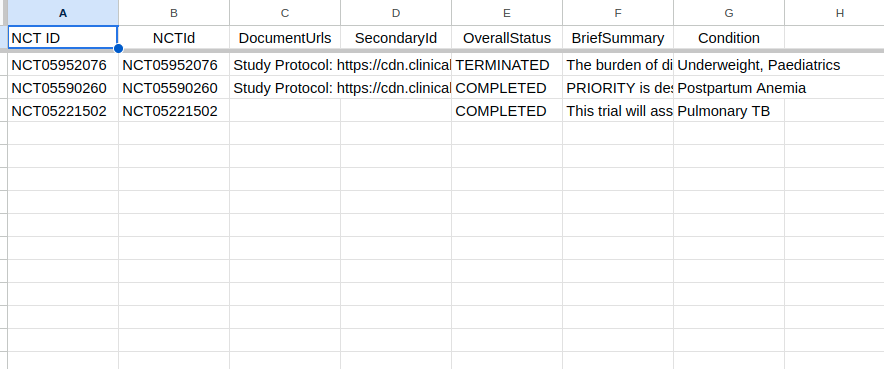
Clinical Trial Data Lookup Google Sheets™ plugin Do you need to look up clinical trial data from the NCT ID? Fast Data Science has developed a Google Sheets™ add-on (plugin) which finds clinical trials data. The plugin uses the clinicaltrials.gov API. Clinical Trial Data Google Sheets™ Plugin Install plugin Install the free Google Sheets™ plugin for looking up clinical trial data Install Plugin The user will provide a number of NCT IDs in column A (or whichever one they choose) in the Google Sheet™, and the tool will look up those NCT IDs and retrieve information on those trials and populate that information into columns.

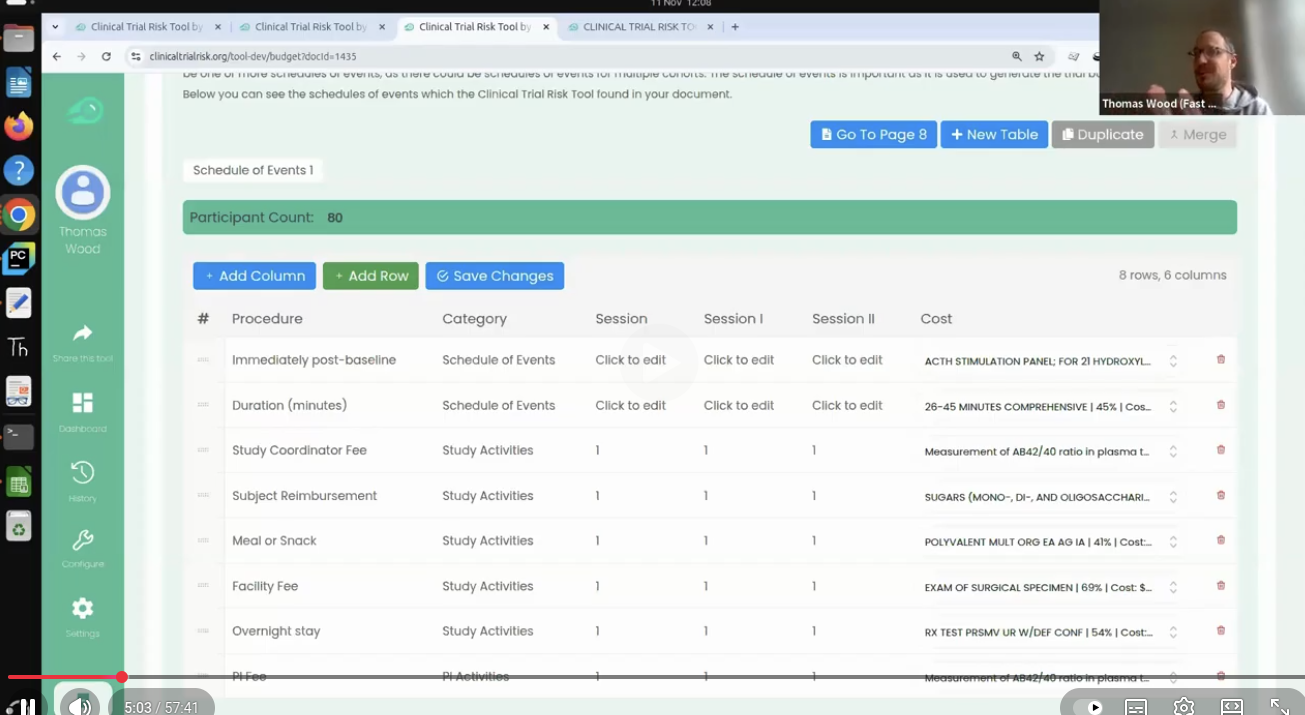
You may have been tasked with creating a clinical trial site budget. This is a budget itemising all the costs that will be incurred at the study site. The site budget may be needed To estimate the total cost of that site running part of the trial, as part of a bid to the CRO or sponsor To identify who needs to be reimbursed for each cost item To ascertain whether or not it is feasible to run the trial at that site To ensure that the site is reimbursed for the costs that they incur while running the trial If you are building a site budget, the most important document is the study protocol.
Fast Data Science are pleased to announce that the Clinical Trial Risk Tool, has been accepted as a supplier on the UK Government’s G-Cloud 15 framework. The G-Cloud 15 framework allows public sector bodies to buy cloud-based computing services such as AI, hosting, software and support directly without lengthy, costly traditional tender processes. What does the Clinical Trial Risk Tool do? The Clinical Trial Risk Tool helps users to analyse clinical trial protocols and documents.