
This post originally appeared on Fast Data Science’s blog on LinkedIn.
In today’s ever-evolving healthcare landscape, technology is crucial to improving patient care, streamlining processes, and enhancing outcomes. Natural Language Processing (NLP) is one such technology that is revolutionising the way healthcare organisations operate. For instance, NLP has been used to analyse patient feedback and identify trends in satisfaction levels, leading to targeted improvements in service quality. In this article, we will explore the role of NLP in healthcare, its benefits, and potential applications.
Natural Language Processing) is a branch of artificial intelligence (AI) that focuses on allowing computers to understand, interpret, and generate human language. With NLP tools, healthcare organisations can analyse vast amounts of unstructured document text data, such as electronic health records, clinical notes, research articles, and patient feedback, and extract valuable insights and improve decision-making. Using NLP in healthcare systems comes with its own challenges, such as the need for high-quality data and potential biases in the algorithms used.
Clinical research generates large amounts of unstructured text data, from the clinical trial protocol to statistical analysis plans, adverse events and narrative reports, key opinion leader (KOL) insights, and interview transcripts in Phase 4 trials (real-world evidence). This data often takes the form of many unstructured PDF documents that few clinical research professionals have time to read. This is a huge burden on trial sponsors and contract research organisations (CROs).
The clinical trial protocol is one of the documents seen everywhere in clinical research.
When a pharmaceutical company develops a drug, it must pass through several clinical trial phases before regulators can approve it. The amount of unstructured text generated in this process opens the gateway to pharmaceutical NLP modelling. In particular, the protocol contains key information about how long the trial will run, the risks to participants, what kind of treatment is being investigated, etc.
The problem is that each protocol is up to 200 pages long, and the structure can vary. That’s where machine learning and NLP for clinical trials become helpful.
We have been using NLP to analyse clinical trial protocols in the pharmaceutical industry. We have developed hybrid NLP models for organisations such as the Gates Foundation and the German pharma company Boehringer Ingelheim, which can analyse clinical trial documents and extract key features which can be used to produce an estimate of the risk, complexity or dollar cost of running a trial.
Our model can ‘read’ the document and output a number of metrics that can be combined with a financial model.
You can try a public version of our clinical trial risk tool, limited for HIV and TB trials, here: https://app.clinicaltrialrisk.org/. More information on how the Clinical Trial Risk Tool was developed is at: Wood TA and McNair D. Clinical Trial Risk Tool: software application using natural language processing to identify the risk of trial uninformativeness [version 1; peer review: awaiting peer review]. Gates Open Res 2023, 7:56 (https://doi.org/10.12688/gatesopenres.14416.1)
If you are interested in using NLP to analyse clinical research documentation such as protocols, informed consent forms (ICFs) and statistical analysis plans (SAPs), or narratives, adverse event reports, or KOL insights, please contact Fast Data Science at https://fastdatascience.com/contact/.
One of the most significant ways NLP transforms healthcare is by automating clinical documentation. In the past, healthcare providers spent considerable time manually entering patient information into electronic health records. NLP technology streamlines this process, automatically extracting relevant data from clinical notes. This reduces the burden on healthcare professionals and minimises errors, allowing them to focus more on patient care.
NLP can also play a vital role in enhancing diagnostics and treatment plans. By analysing medical literature, clinical guidelines, and patient data, NLP algorithms can assist healthcare providers in making more informed decisions about diagnosis, treatment options, and patient outcomes. However, it’s important to consider the ethical implications of using NLP, such as data privacy and algorithmic bias, and ensure that its use aligns with ethical guidelines and regulations.
Beyond its clinical applications, NLP holds the potential to improve patient engagement. By analysing patient feedback, social media discussions, and online reviews, healthcare organisations can gain valuable insights into patient preferences, concerns, and satisfaction levels. Armed with this information, they can tailor healthcare services to meet the demand of each patient, ultimately enhancing the overall patient experience.
AI in Pharma: https://www.youtube.com/watch?v=WhlrPFy8Irc
Conclusion
As technology advances, the role of Natural Language Processing (NLP) in healthcare will only continue to grow.
Already, many leading healthcare organisations are harnessing the power of NLP to enhance clinical documentation, diagnostics and treatment, and patient engagement.
At Fast Data Science, clinical research, in particular, has a huge potential for cost savings and financial planning via NLP. NLP can help anticipate trial failures and de-risk clinical trials.
By understanding the potential applications of NLP and integrating this technology into their operations, healthcare organisations will stay at the forefront of innovation and provide the best possible care to their patients.
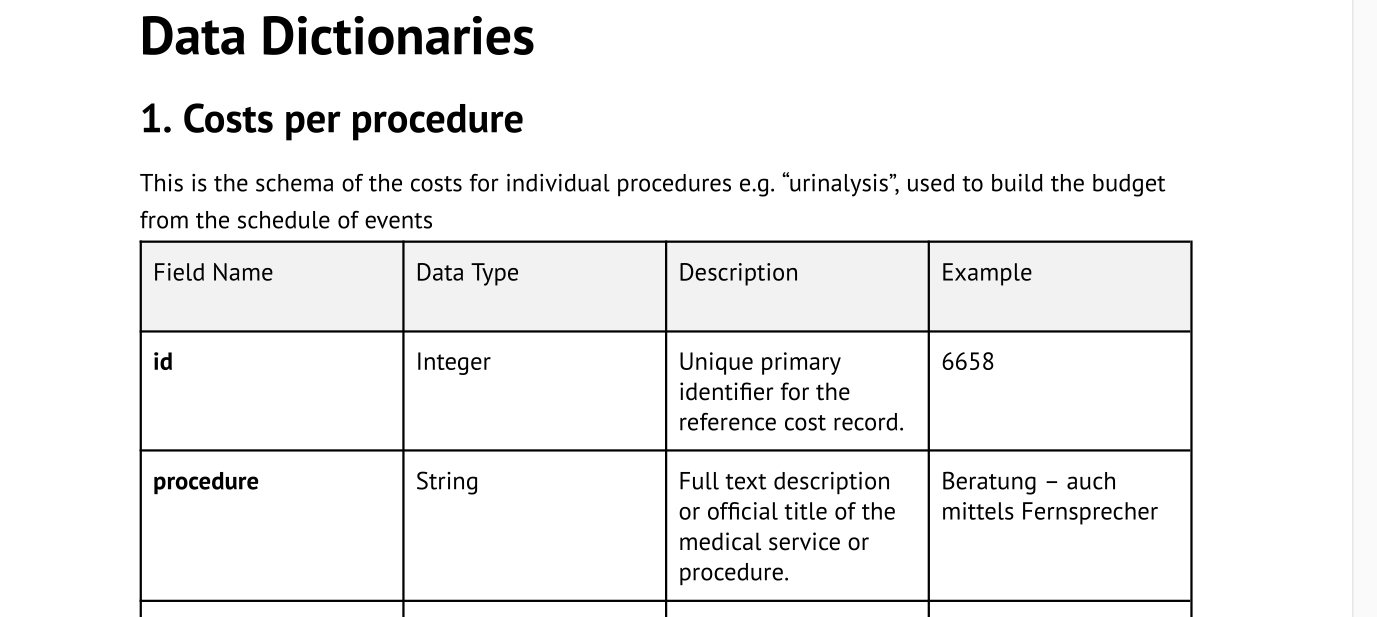
The Clinical Trial Risk Tool estimates top down cost and itemised site budgets using proprietary cost datasets of trial costs and procedure costs. These costs are assembled from publically available data. You can click below to view our data dictionary. Clinical Trial Risk Tool Trial cost data You can download the data dictionary used for cost estimation in the Clinical Trial Risk Tool Download data dictionary
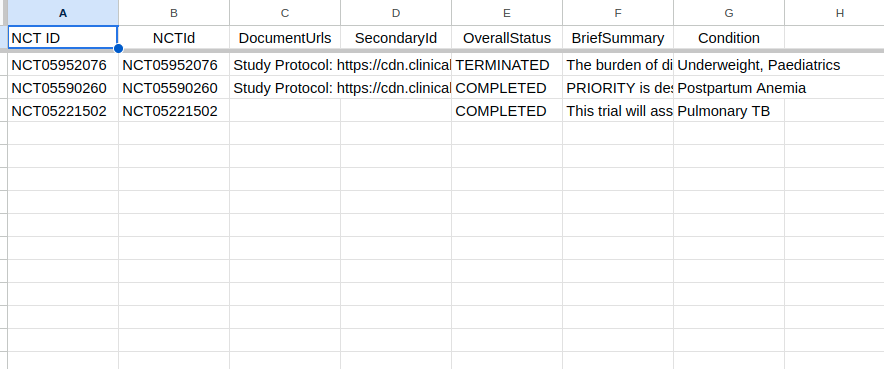
Clinical Trial Data Lookup Google Sheets™ plugin Do you need to look up clinical trial data from the NCT ID? Fast Data Science has developed a Google Sheets™ add-on (plugin) which finds clinical trials data. The plugin uses the clinicaltrials.gov API. Clinical Trial Data Google Sheets™ Plugin Install plugin Install the free Google Sheets™ plugin for looking up clinical trial data Install Plugin The user will provide a number of NCT IDs in column A (or whichever one they choose) in the Google Sheet™, and the tool will look up those NCT IDs and retrieve information on those trials and populate that information into columns.
You may have been tasked with creating a clinical trial site budget. This is a budget itemising all the costs that will be incurred at the study site. The site budget may be needed To estimate the total cost of that site running part of the trial, as part of a bid to the CRO or sponsor To identify who needs to be reimbursed for each cost item To ascertain whether or not it is feasible to run the trial at that site To ensure that the site is reimbursed for the costs that they incur while running the trial If you are building a site budget, the most important document is the study protocol.