This post originally appeared on Fast Data Science’s blog on LinkedIn.
Clinical trial management requires precision, efficiency, and reliable tools. With many platforms available, each brings unique capabilities to the table. Let’s explore the comparisons between Fast Data Science’s Clinical Trial Risk Tool and other data tools used in clinical trials
Fast Data Science’s Clinical Trial Risk Tool focuses on risk and cost estimation through AI and Natural Language Processing (NLP). This software tool analyzes trial protocols to determine cost estimates and categorizes trial risks as high, medium, or low. The AI-driven approach allows for precision and speed, making it particularly useful for organizations anticipating financial and logistical challenges early in the trial planning process.
Strengths:
AI and NLP-driven precision in cost and risk estimation
Streamlined, lightweight tool ideal for integrating with other systems
Open-source, ensuring transparency and security
Limitations:
Focuses primarily on risk and cost estimation
More suitable for organizations focused on efficient budgeting and risk mitigation
Medidata’s platform is known for its robust CTMS solutions, integrating electronic data capture (EDC) tools, patient data tracking, and analytics. Medidata offers tools like decentralized trials, patient-centric solutions, and real-time analytics, allowing sponsors complete control over trial management.
Strengths:
All-in-one platform
Extensive integration capabilities
Real-time data analytics
Limitations:
It can be cost-prohibitive for smaller teams or niche trials
Complex onboarding process
SimpleTrials is a user-friendly CTMS platform designed for small—to mid-sized organizations. It focuses on trial planning, tracking, and management and offers study dashboards and document management features.
Strengths:
Affordable and scalable
Simple interface ideal for smaller teams
Quick setup and onboarding
Limitations:
Lacks some advanced analytics features
Limited capabilities for large-scale global trials
OpenClinica offers an open-source platform that provides flexibility and customization for clinical trials. It is widely used for EDC and clinical data management, making it an attractive option for teams that prefer to tailor their software to specific needs.
Strengths:
Open-source and customizable
Strong focus on EDC and data management
Suitable for academic and investigator-driven studies
Limitations:
Requires technical expertise for customizations
May not offer the extensive support available in commercial platforms
Oracle Health Sciences provides a comprehensive solution for clinical trials, focusing on AI and machine learning. Their suite of tools includes trial management, monitoring, data collection, and regulatory compliance.
Strengths:
Cutting-edge AI and machine learning capabilities
Scalable for global trials
Extensive integration with other Oracle products
Limitations:
High cost
Complex for smaller organizations to implement without significant resources
Each platform offers distinct advantages for clinical trials. Fast Data Science’s Clinical Trial Risk Tool stands out for its AI-powered risk and cost estimation and can be used on its own on your protocols, or you can incorporate the Clinical Trial Risk Tool into your broader corporate decision making process and financial planning. Whether you’re streamlining budgets, reducing trial risks, or evaluating a portfolio of investments in a biotech company, this tool helps you make more informed decisions from the start.
Try it for FREE today and experience precise cost and risk estimates in seconds. Contact us for more information or to schedule a DEMO and see how the Clinical Trial Risk Tool can optimize your trial planning!
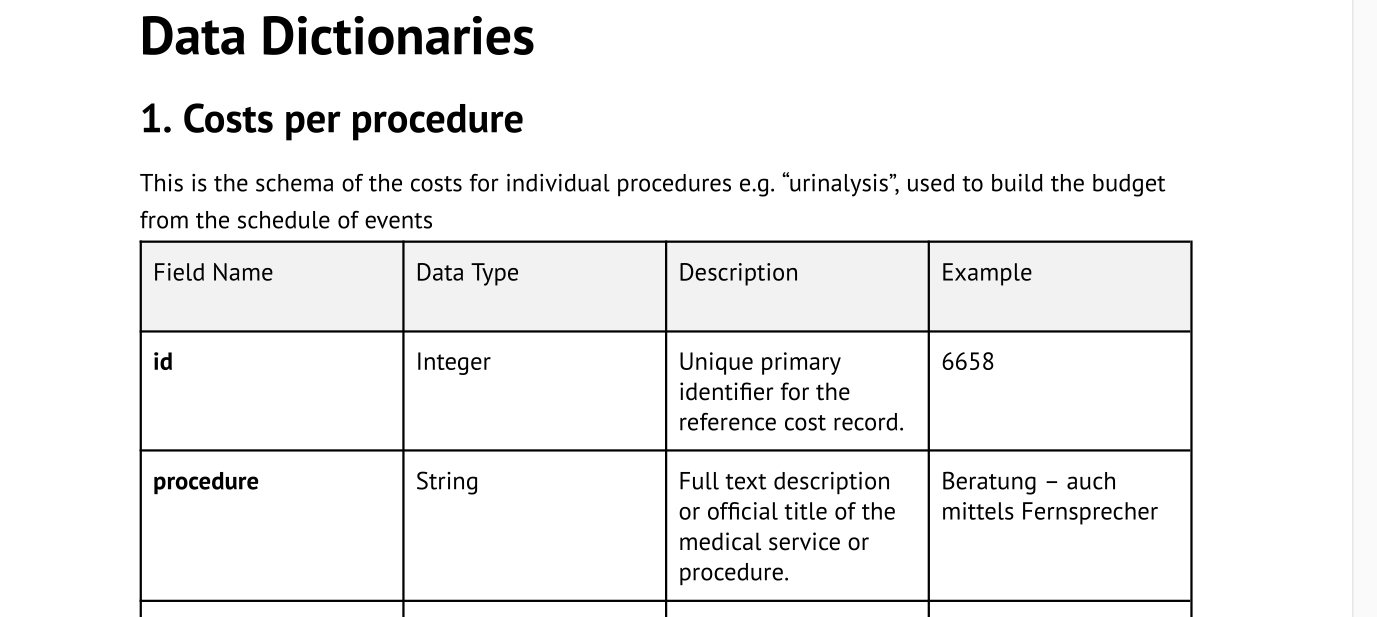
The Clinical Trial Risk Tool estimates top down cost and itemised site budgets using proprietary cost datasets of trial costs and procedure costs. These costs are assembled from publically available data. You can click below to view our data dictionary. Clinical Trial Risk Tool Trial cost data You can download the data dictionary used for cost estimation in the Clinical Trial Risk Tool Download data dictionary
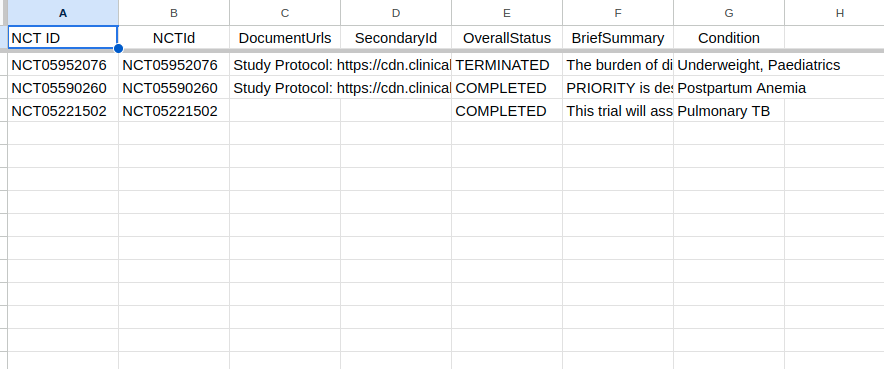
Clinical Trial Data Lookup Google Sheets™ plugin Do you need to look up clinical trial data from the NCT ID? Fast Data Science has developed a Google Sheets™ add-on (plugin) which finds clinical trials data. The plugin uses the clinicaltrials.gov API. Clinical Trial Data Google Sheets™ Plugin Install plugin Install the free Google Sheets™ plugin for looking up clinical trial data Install Plugin The user will provide a number of NCT IDs in column A (or whichever one they choose) in the Google Sheet™, and the tool will look up those NCT IDs and retrieve information on those trials and populate that information into columns.
You may have been tasked with creating a clinical trial site budget. This is a budget itemising all the costs that will be incurred at the study site. The site budget may be needed To estimate the total cost of that site running part of the trial, as part of a bid to the CRO or sponsor To identify who needs to be reimbursed for each cost item To ascertain whether or not it is feasible to run the trial at that site To ensure that the site is reimbursed for the costs that they incur while running the trial If you are building a site budget, the most important document is the study protocol.