
The Clinical Trial Risk Tool has been featured in a guest column in Clinical Leader, titled A Tool To Tackle The Risk Of Uninformative Trials, in cooperation with Abby Proch, Executive Editor at Clinical Leader.
In the article, Thomas Wood of Fast Data Science highlights the problem of “uninformative” clinical trials – those that don’t provide meaningful results, even if the drug being tested is effective or ineffective. He distinguishes these from simply “failed” trials and emphasises the ethical and financial waste they represent. Wood explains that while “uninformativeness” lacks a formal definition, it can be understood by examining the five conditions of an “informative” trial as outlined by Zarin, Goodman, and Kimmelman (2019): addressing an important question, meaningful design, feasibility, scientific validity, and timely, accurate reporting. Trials excluded from meta-analyses due to bias are often considered uninformative.
Wood describes how the Clinical Trial Risk Tool tackles this problem by assessing trial protocols against these criteria. He suggests expanding the tool to include a template clinical trial budget derived from real-world cost data (e.g., Sunshine Act disclosures). Further enhancements could include identifying endpoints and inclusion/exclusion criteria, then searching clinical trial registries (like ClinicalTrials.gov) for similar past trials to help users evaluate their planned trial’s design choices.
Wood also suggests tailoring the tool for different user profiles (patient advocates, financial planners, medical professionals) by providing personalised feedback and recommended actions for protocol improvement. The goal is not to replace human review, but to help users identify design gaps and high-risk indicators early in the process.
Fast Data Science is a leading data science consultancy firm providing bespoke machine learning solutions for businesses of all sizes across the globe, with a concentration on the pharmaceutical and healthcare industries.
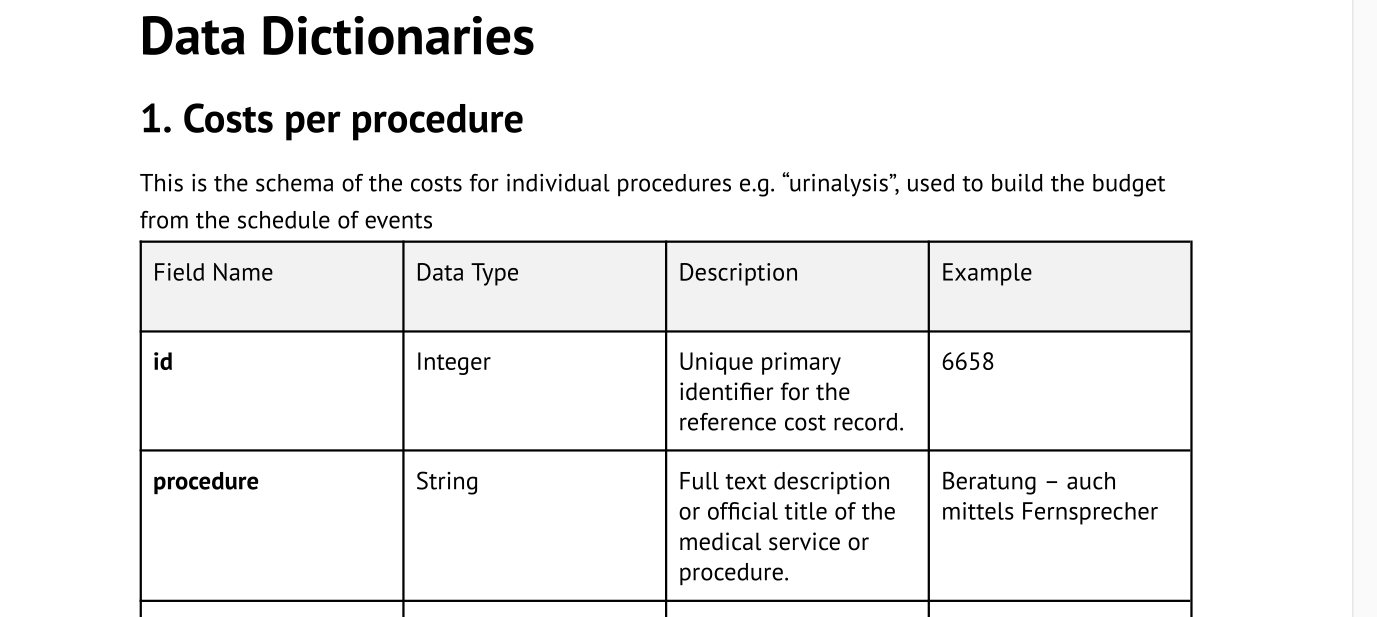
The Clinical Trial Risk Tool estimates top down cost and itemised site budgets using proprietary cost datasets of trial costs and procedure costs. These costs are assembled from publically available data. You can click below to view our data dictionary. Clinical Trial Risk Tool Trial cost data You can download the data dictionary used for cost estimation in the Clinical Trial Risk Tool Download data dictionary
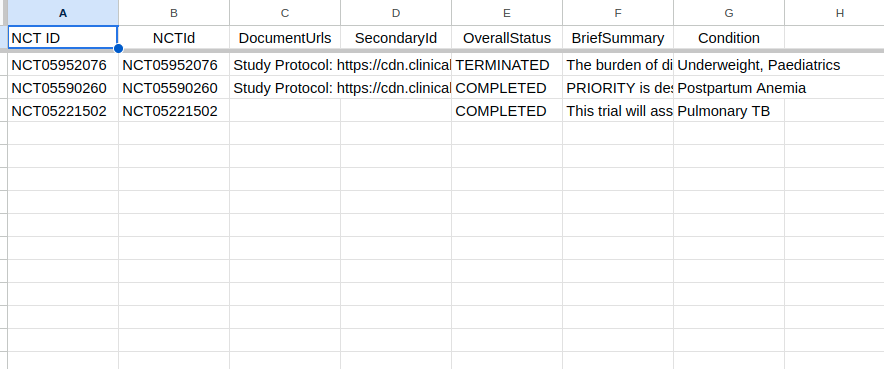
Clinical Trial Data Lookup Google Sheets™ plugin Do you need to look up clinical trial data from the NCT ID? Fast Data Science has developed a Google Sheets™ add-on (plugin) which finds clinical trials data. The plugin uses the clinicaltrials.gov API. Clinical Trial Data Google Sheets™ Plugin Install plugin Install the free Google Sheets™ plugin for looking up clinical trial data Install Plugin The user will provide a number of NCT IDs in column A (or whichever one they choose) in the Google Sheet™, and the tool will look up those NCT IDs and retrieve information on those trials and populate that information into columns.

You may have been tasked with creating a clinical trial site budget. This is a budget itemising all the costs that will be incurred at the study site. The site budget may be needed To estimate the total cost of that site running part of the trial, as part of a bid to the CRO or sponsor To identify who needs to be reimbursed for each cost item To ascertain whether or not it is feasible to run the trial at that site To ensure that the site is reimbursed for the costs that they incur while running the trial If you are building a site budget, the most important document is the study protocol.