
This post originally appeared on Fast Data Science’s blog on LinkedIn.
In clinical research, the journey from a compelling idea to a well-executed study begins with crafting a robust research question and developing a meticulous study plan. This process ensures the study’s feasibility, ethical integrity, and potential impact.
Here’s how to transform your research ideas into actionable study plans.
A research question is the keystone of any clinical study, representing the specific uncertainty the investigator aims to resolve. For instance, among older adults, understanding if structured in-home support can diminish loneliness and prevent functional decline leads to actionable questions such as:
Can structured in-home support programs reduce loneliness among older people?
What types of interventions (peer, family, or group support) are most effective?
Can these programs be effective if conducted remotely?
To define a good research question, ensure it is:
Feasible: Can it be practically studied with available resources?
Important: Does it address a significant issue in the field?
Novel: Does it offer new insights or challenge existing beliefs?
Ethical: Can it be conducted ethically, with necessary approvals?
Experienced researchers often draw questions from previous studies, while new investigators can look to existing literature and clinical experiences for inspiration. Reflect on:
Studies that have intrigued you.
Clinical cases where outcomes could be improved.
Current practices that might be questioned or refined.
Becoming an expert in your chosen field is essential for developing strong research questions and study plans. Engage in continuous learning by:
Conducting systematic literature reviews.
Attending scientific meetings and conferences.
Building relationships with experts and following thought leaders.
Staying updated with resources like ClinicalTrials.gov and Prospero.
Once you have a solid research question, the next step is to develop a comprehensive study plan. Key components include:
Background and Significance:
Conduct a thorough literature review to establish the context and importance of your research question.
Highlight the potential impact of your study on clinical practice or public health.
Study Design:
Based on the research question and resources (e.g., observational, clinical trial), choose the appropriate study design.
Consider cross-sectional, cohort, or case-control designs for observational studies and randomized controlled intervention trials.
Participant Selection:
Define inclusion and exclusion criteria to ensure a representative sample.
Estimate the necessary sample size to achieve reliable results.
Variables and Measurements:
Clearly define predictor, confounding, and outcome variables.
Ensure these variables are measurable and relevant to the research question.
Statistical Analysis:
Formulate hypotheses and select appropriate statistical methods.
Plan data analysis to ensure valid and reliable results.
Ethical standards are paramount in clinical research. Ensure your study:
Obtains informed consent from participants.
Maintains participant confidentiality.
Receives approval from ethical committees and adheres to regulatory guidelines.
Creativity and collaboration play critical roles in refining research ideas. Engage with colleagues, attend conferences, and remain open to new technologies and methodologies. For example, technological advances in genetic, molecular, and digital health can offer fresh perspectives and innovative research questions.
Transforming a research idea into an actionable study plan requires a straightforward, well-defined question and a detailed, ethical approach. By focusing on feasibility, importance, novelty, and ethics and continuously building expertise, researchers can develop impactful studies that advance clinical knowledge and improve patient outcomes.
Streamline your clinical research with our Clinical Trial Risk Tool. Use AI to derive accurate cost and risk estimates from clinical documents, enhancing your study’s feasibility and effectiveness. Try the Clinical Trial Risk Tool today!
#ClinicalResearch #ResearchMethodology #StudyDesign #ClinicalTrial
Reference:
Browner, Warren, S. et al. Designing Clinical Research. Available from: Wolters Kluwer, (5th Edition). Wolters Kluwer Health, 2022.
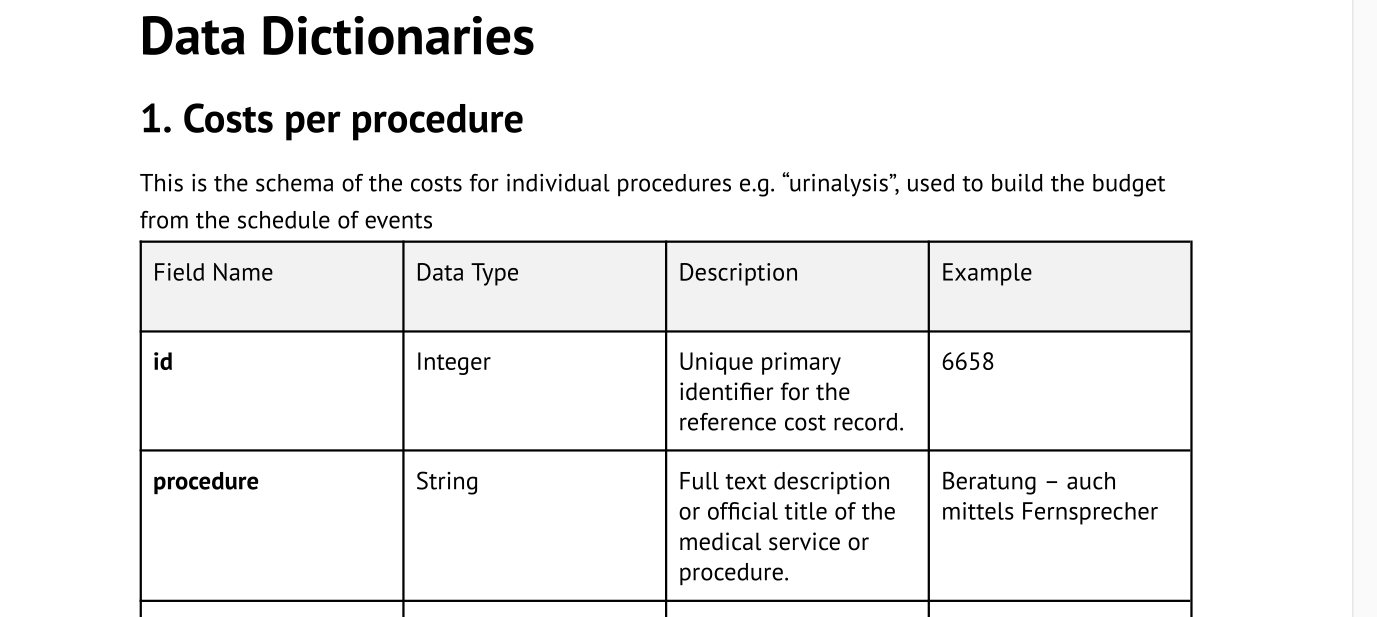
The Clinical Trial Risk Tool estimates top down cost and itemised site budgets using proprietary cost datasets of trial costs and procedure costs. These costs are assembled from publically available data. You can click below to view our data dictionary. Clinical Trial Risk Tool Trial cost data You can download the data dictionary used for cost estimation in the Clinical Trial Risk Tool Download data dictionary
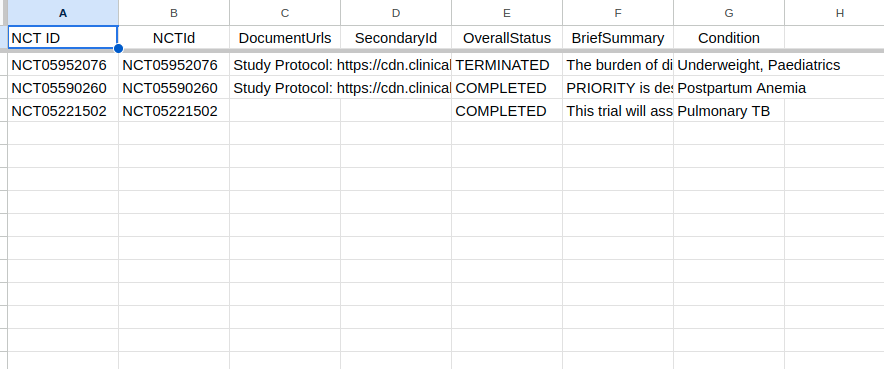
Clinical Trial Data Lookup Google Sheets™ plugin Do you need to look up clinical trial data from the NCT ID? Fast Data Science has developed a Google Sheets™ add-on (plugin) which finds clinical trials data. The plugin uses the clinicaltrials.gov API. Clinical Trial Data Google Sheets™ Plugin Install plugin Install the free Google Sheets™ plugin for looking up clinical trial data Install Plugin The user will provide a number of NCT IDs in column A (or whichever one they choose) in the Google Sheet™, and the tool will look up those NCT IDs and retrieve information on those trials and populate that information into columns.
You may have been tasked with creating a clinical trial site budget. This is a budget itemising all the costs that will be incurred at the study site. The site budget may be needed To estimate the total cost of that site running part of the trial, as part of a bid to the CRO or sponsor To identify who needs to be reimbursed for each cost item To ascertain whether or not it is feasible to run the trial at that site To ensure that the site is reimbursed for the costs that they incur while running the trial If you are building a site budget, the most important document is the study protocol.