
This post originally appeared on Fast Data Science’s blog on LinkedIn.
Clinical research can be better understood through two primary perspectives: the anatomy and physiology of a study. These themes help researchers design and conduct efficient and valid studies.
The anatomy of research encompasses the tangible elements of a study plan. A protocol lays out these elements, serving as a detailed blueprint for the study. The main components of this blueprint include:
Research Question: The core objective or the specific uncertainty the study aims to resolve. It often begins with a broad concern narrowed down to a concrete, researchable issue. For example:
Background and Significance: Conduct a thorough literature review to understand what is already known about the topic. It helps refine the research question and establish the study’s rationale by identifying gaps in existing knowledge.
Design: The study’s structure includes decisions about whether to conduct an intervention or an observational study. Different designs suit different research questions and resources. For example:
Participants: Criteria for selecting study participants and the sampling design.
Variables: Defining predictor variables, confounding variables, and outcome variables, which are the measurements to be made during the study.
Statistical Issues include formulating hypotheses, determining sample size, and deciding on the analytic approach.
The physiology of research focuses on the processes that make the study work and how to ensure these processes yield valid conclusions. The aim is to minimise errors that could compromise the study’s findings and applicability to the larger population.
Design studies to yield reliable results about what happened within the research and how to generalize those results. It involves rigorous data collection, accurate measurement techniques, and appropriate statistical analysis to ensure that conclusions are valid and actionable.
While separating the anatomy and physiology of research helps simplify complex topics, it is essential to understand that these components are interdependent. Just as in the human body, the anatomy of a research study (its structure) and its physiology (how it functions) must work together seamlessly to produce meaningful and reliable results.
Understanding both the anatomy and physiology of clinical research is crucial for designing studies that are efficient, valid, and capable of providing significant insights. By meticulously planning the study’s structure and ensuring the processes are robust, researchers can achieve reliable and applicable findings to broader contexts.
Fast Data Science has created a Clinical Trial Risk Tool that uses AI to help you derive cost and risk estimates from clinical documents. Try the Clinical Trial Risk Tool here: https://mailchi.mp/fastdatascience/clinicaltrialrisktool
Source:
Browner, Warren, S. et al. Designing Clinical Research. Available from: Wolters Kluwer, (5th Edition). Wolters Kluwer Health, 2022.
The Importance Of Accurate Cost Estimation In Clinical Trials
Optimise Your Clinical Trial Workflow Then Save Time And Money
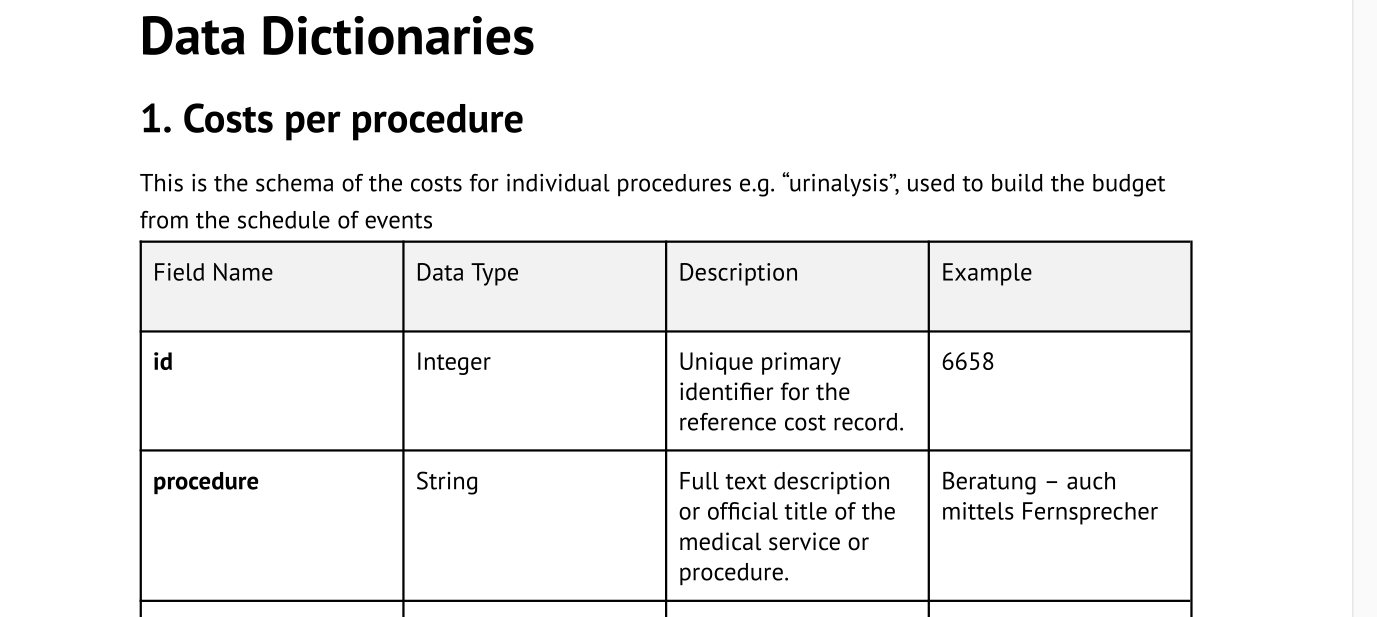
The Clinical Trial Risk Tool estimates top down cost and itemised site budgets using proprietary cost datasets of trial costs and procedure costs. These costs are assembled from publically available data. You can click below to view our data dictionary. Clinical Trial Risk Tool Trial cost data You can download the data dictionary used for cost estimation in the Clinical Trial Risk Tool Download data dictionary
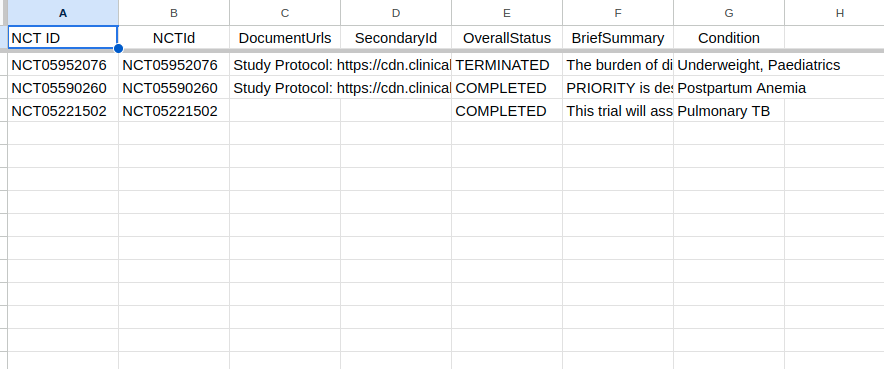
Clinical Trial Data Lookup Google Sheets™ plugin Do you need to look up clinical trial data from the NCT ID? Fast Data Science has developed a Google Sheets™ add-on (plugin) which finds clinical trials data. The plugin uses the clinicaltrials.gov API. Clinical Trial Data Google Sheets™ Plugin Install plugin Install the free Google Sheets™ plugin for looking up clinical trial data Install Plugin The user will provide a number of NCT IDs in column A (or whichever one they choose) in the Google Sheet™, and the tool will look up those NCT IDs and retrieve information on those trials and populate that information into columns.

You may have been tasked with creating a clinical trial site budget. This is a budget itemising all the costs that will be incurred at the study site. The site budget may be needed To estimate the total cost of that site running part of the trial, as part of a bid to the CRO or sponsor To identify who needs to be reimbursed for each cost item To ascertain whether or not it is feasible to run the trial at that site To ensure that the site is reimbursed for the costs that they incur while running the trial If you are building a site budget, the most important document is the study protocol.