
This post originally appeared on Fast Data Science’s blog on LinkedIn.
Formulating a robust research question is the foundation of any successful clinical research study. This fundamental step shapes the entire project’s direction, feasibility, and impact. Let’s explore the essential aspects of crafting an effective research question.
The best research questions for seasoned investigators often stem from their prior studies or field observations. However, new investigators, although lacking extensive experience, can bring fresh perspectives that might lead to innovative approaches. It’s crucial to differentiate between a research interest and a research question. For instance, the question, “Does providing a regular basic income reduce depression among middle-aged adults?” arises from a broader interest in social determinants of health.
To identify a compelling research question:
Reflect on studies that have piqued your interest.
Consider clinical scenarios where patient outcomes could have been improved.
Question current practices and their effectiveness.
A substantial research question should be Feasible, Important, Novel, and Ethical (FINE):
Feasible: Ensure the study can be practically conducted with available resources, including sufficient participants.
Important: The question should address a significant issue that can impact patient care or advance scientific knowledge.
Novel: It should contribute new insights or challenge existing paradigms.
Ethical: The study must respect ethical standards and obtain necessary approvals.
Becoming an expert in your chosen area is fundamental. Conduct thorough literature reviews and stay updated with recent advances by:
Attending scientific meetings.
Engaging with experts and following thought leaders.
Utilizing resources like ClinicalTrials.gov and Prospero for ongoing research and systematic reviews.
Research ideas can emerge from various sources:
Clinical experiences and observations.
Collaborations with other investigators.
Teaching and discussions with students.
Informal conversations at conferences.
Creativity plays a vital role in this process. Embrace new technologies and methodologies to generate innovative research questions.
The journey from identifying a research interest to formulating a feasible research question requires careful consideration, thorough research, and creativity. By focusing on the FINE characteristics and continuously building your expertise, you can develop impactful research questions that pave the way for meaningful and valid studies.
Enhance your clinical research with precise cost and risk estimates using our Clinical Trial Risk Tool. This AI-powered tool analyzes clinical documents to provide actionable insights, helping you make informed decisions. Try the Clinical Trial Risk Tool today!
Source:
Browner, Warren, S. et al. Designing Clinical Research. Available from: Wolters Kluwer, (5th Edition). Wolters Kluwer Health, 2022.
#ClinicalResearch #ResearchMethodology #HealthcareInnovation #ScientificInquiry
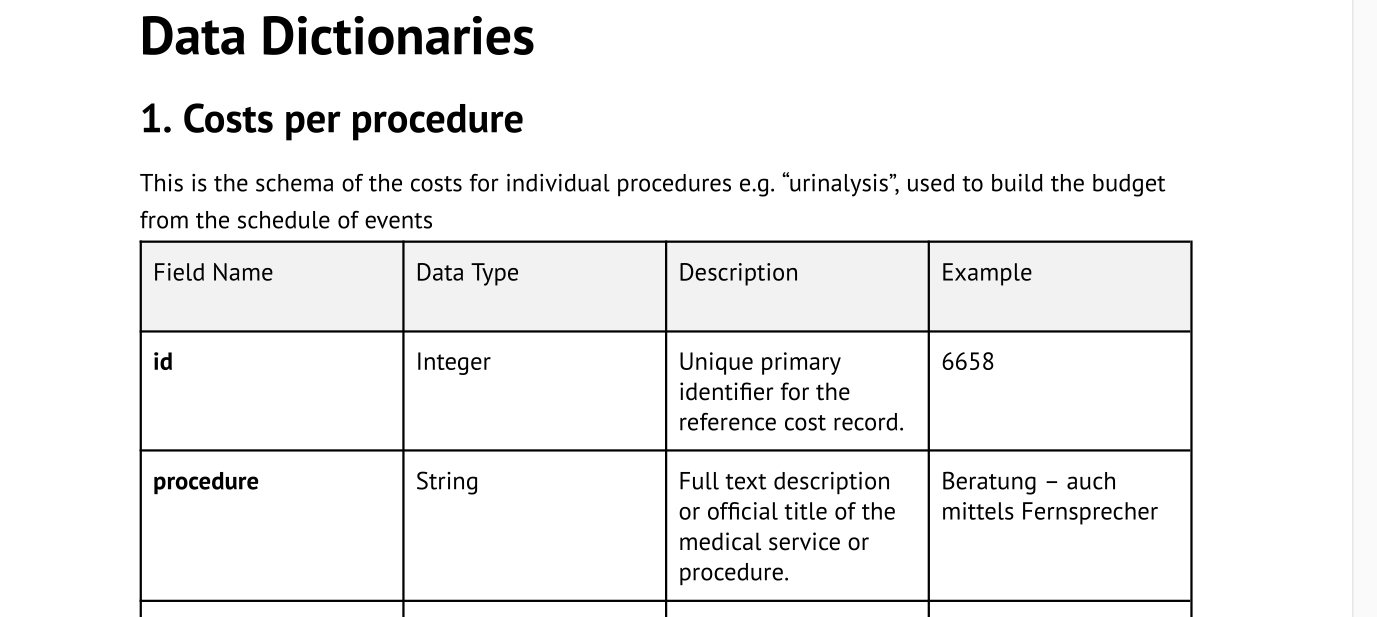
The Clinical Trial Risk Tool estimates top down cost and itemised site budgets using proprietary cost datasets of trial costs and procedure costs. These costs are assembled from publically available data. You can click below to view our data dictionary. Clinical Trial Risk Tool Trial cost data You can download the data dictionary used for cost estimation in the Clinical Trial Risk Tool Download data dictionary
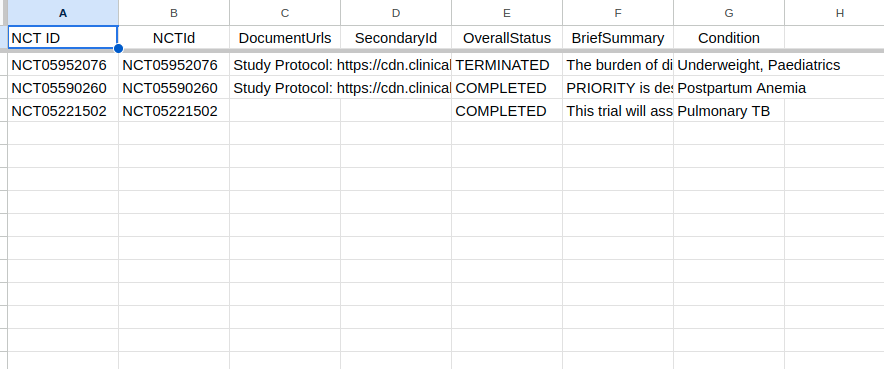
Clinical Trial Data Lookup Google Sheets™ plugin Do you need to look up clinical trial data from the NCT ID? Fast Data Science has developed a Google Sheets™ add-on (plugin) which finds clinical trials data. The plugin uses the clinicaltrials.gov API. Clinical Trial Data Google Sheets™ Plugin Install plugin Install the free Google Sheets™ plugin for looking up clinical trial data Install Plugin The user will provide a number of NCT IDs in column A (or whichever one they choose) in the Google Sheet™, and the tool will look up those NCT IDs and retrieve information on those trials and populate that information into columns.
You may have been tasked with creating a clinical trial site budget. This is a budget itemising all the costs that will be incurred at the study site. The site budget may be needed To estimate the total cost of that site running part of the trial, as part of a bid to the CRO or sponsor To identify who needs to be reimbursed for each cost item To ascertain whether or not it is feasible to run the trial at that site To ensure that the site is reimbursed for the costs that they incur while running the trial If you are building a site budget, the most important document is the study protocol.